Joe Goode is 79 and still painting vigorously in his studio near the Santa Monica Airport, but back in the early 1960s, he was sitting in a car in Oklahoma City with an old high school buddy. Artist Jerry McMillan was trying to convince him to join him in California.
Read MoreLita Albuquerque would like to map the sky. She'd like to stitch together the stars and the sand, sending a blanket of fluid, brightly colored dancers across the open, dusty desert floor.
Read MoreThe women who inhabit the nine vibrant, introspective paintings (all 2015 or 2016) in Heidi Hahn’s exhibition “Bent Idle” embody an array of emotions, their demeanors both infectious and startling. In I Had a Dream of Being Seen and It Looked Like You, an exuberant figure raises her arms in the air. To her right, another woman, with a look of cautious artistic pride, holds up a small painted portrait of her companion—a blobby rendering.
Read MoreLita Albquerque’s current exhibition 20/20: Accelerando at USC Fisher Museum will be closing on April 10th.
Lita Albuquerque's 20/20: Accelerando is a haunting 3-gallery (26-minute) film installation with its original music score by artist and composer Robbie C. Williamson.
Read MoreThe clock reads 12:30 in “Everything Left Is Plain” (2016), a pink-red painting in Heidi Hahn’s first New York solo show, “Bent Idle,” at Jack Hanley.
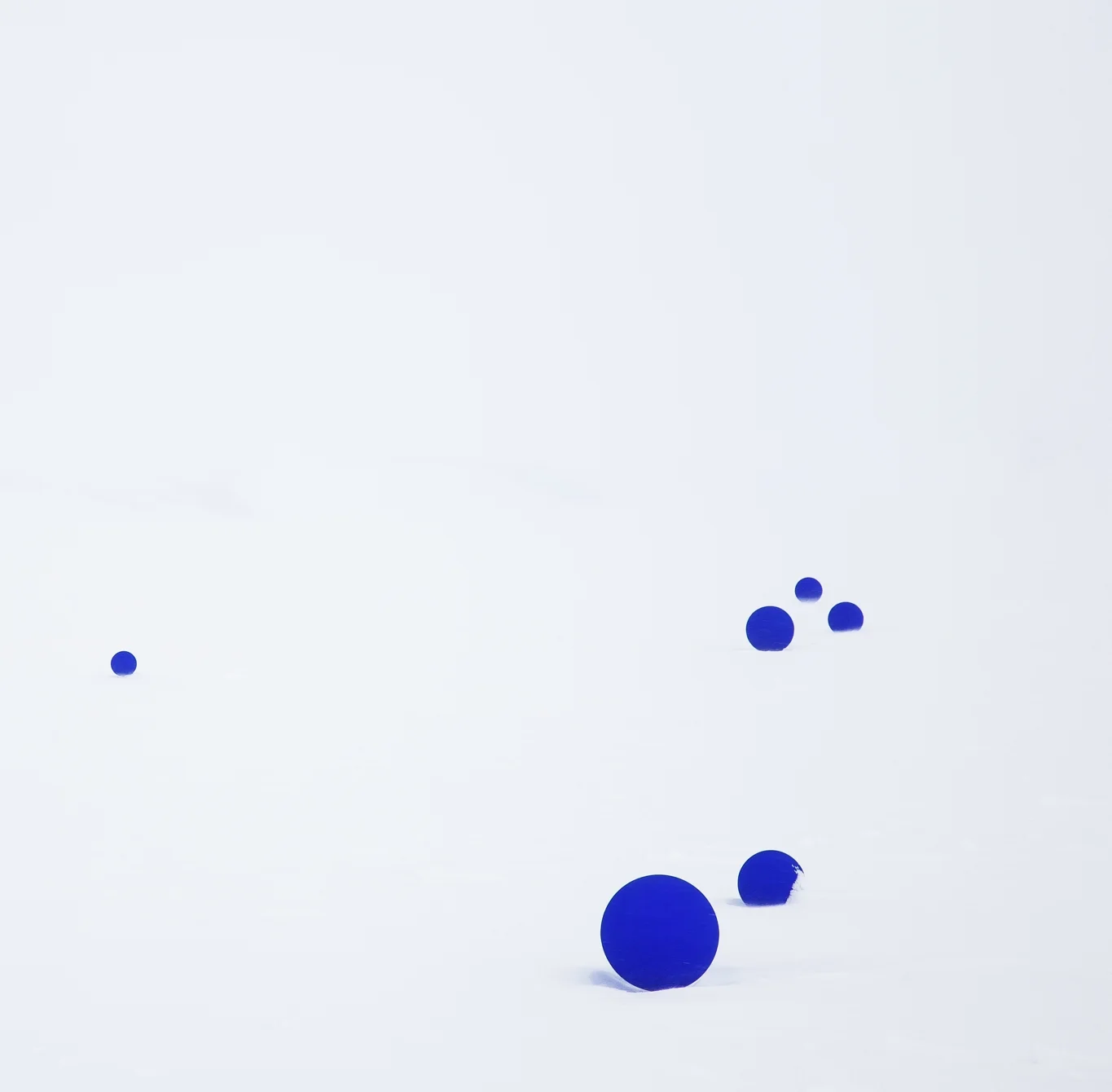
Read MoreLita Albuquerque’s career stretches back to the 1960s, when she developed her praxis as part of California’s Light and Space movement. She has always had a propensity toward remote, desolate environments; over the four decades she has been creating, she has installed works at epic locations, including the Antarctic, Death Valley and the Mojave desert, and at the Pyramids at Giza, often completed in collaboration with architects.
Read MoreThe earth’s polar regions are the site of some of the greatest moral, political, and economic conflicts of our time. Though the scale of human activity in these areas is not enormous, the impact of scandalously shortsighted growth is realized most destructively in these remote places. Images of these areas have become increasingly common as they melt away, causing damage across the globe.
Read MoreSusan Sontag argues that "whatever goal is set for art, eventually proves restrictive, matched against the widest goals of consciousness." While Sontag famously defined art as a "form of consciousness," she also insists that "outgrown maps of consciousness are redrawn."
Read MoreToday, I want to talk about a few artists whose art made me stare, think, and wonder. I'm talking about artists whom I got the chance to meet in the last couple of weeks and ask some questions. And all of them are smart, eloquent, and courageous women. That's why I prefer to think about them as "Ladies Who Dare."
Read MoreAre you stuck in the Waiting Place but are not quite sure Flip the gender on Keith Gessen’s 2008 book, “All The Sad Young Literary Men,” and you’d end up with a suitable alt-title for the terrific group of paintings in this young artist’s first solo with the gallery.
Read MoreThe Norton Simon Museum presents Duchamp to Pop, an exhibition that examines Marcel Duchamp’s potent influence on Pop Art and its leading artists, among them Andy Warhol, Jim Dine and Ed Ruscha.
Read MoreFebruary 12, 12:00 - 1:00 pm
Join Lita Albuquerque for an informal talk and walkthrough of 20/20: Accelerando
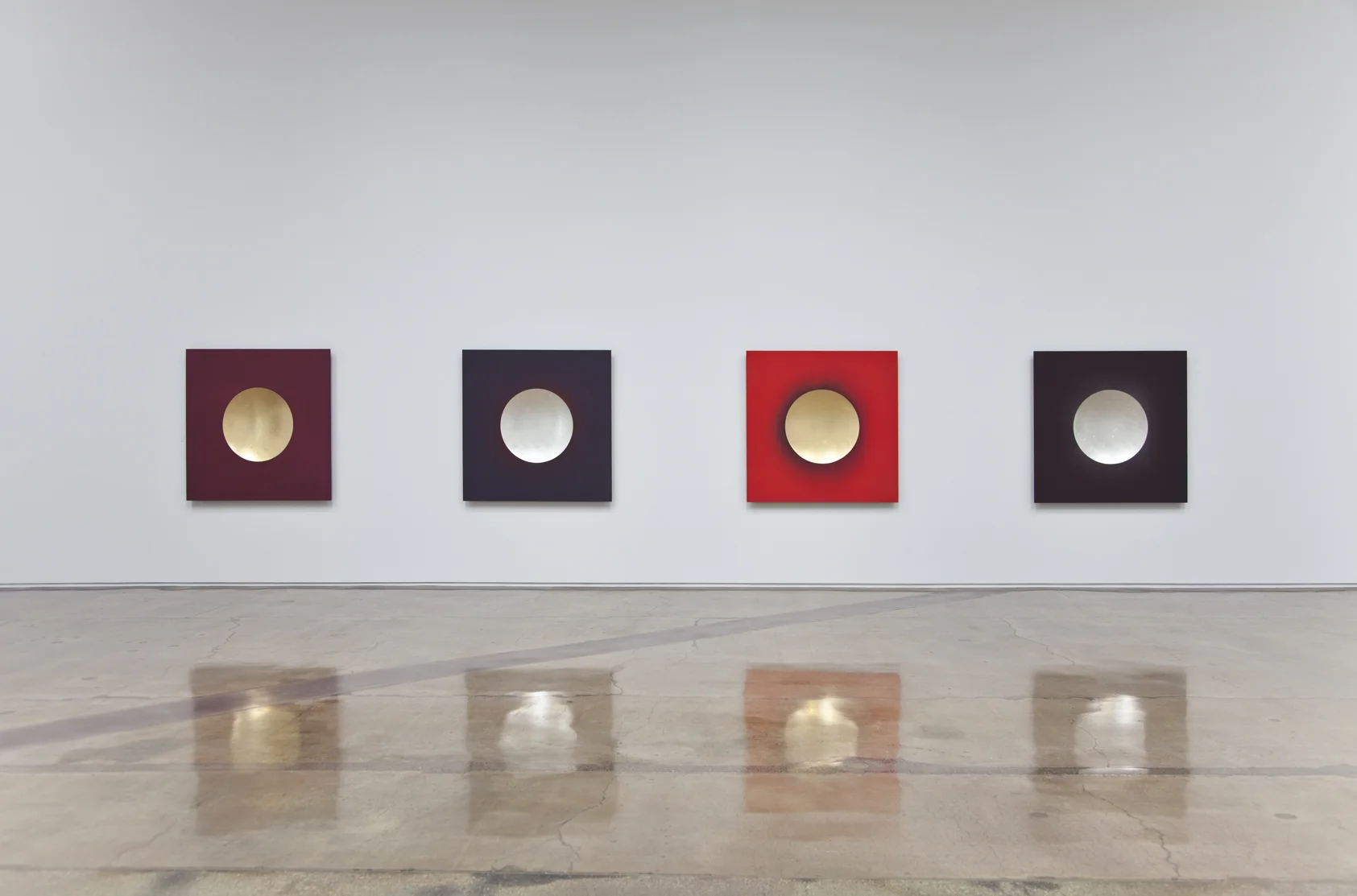
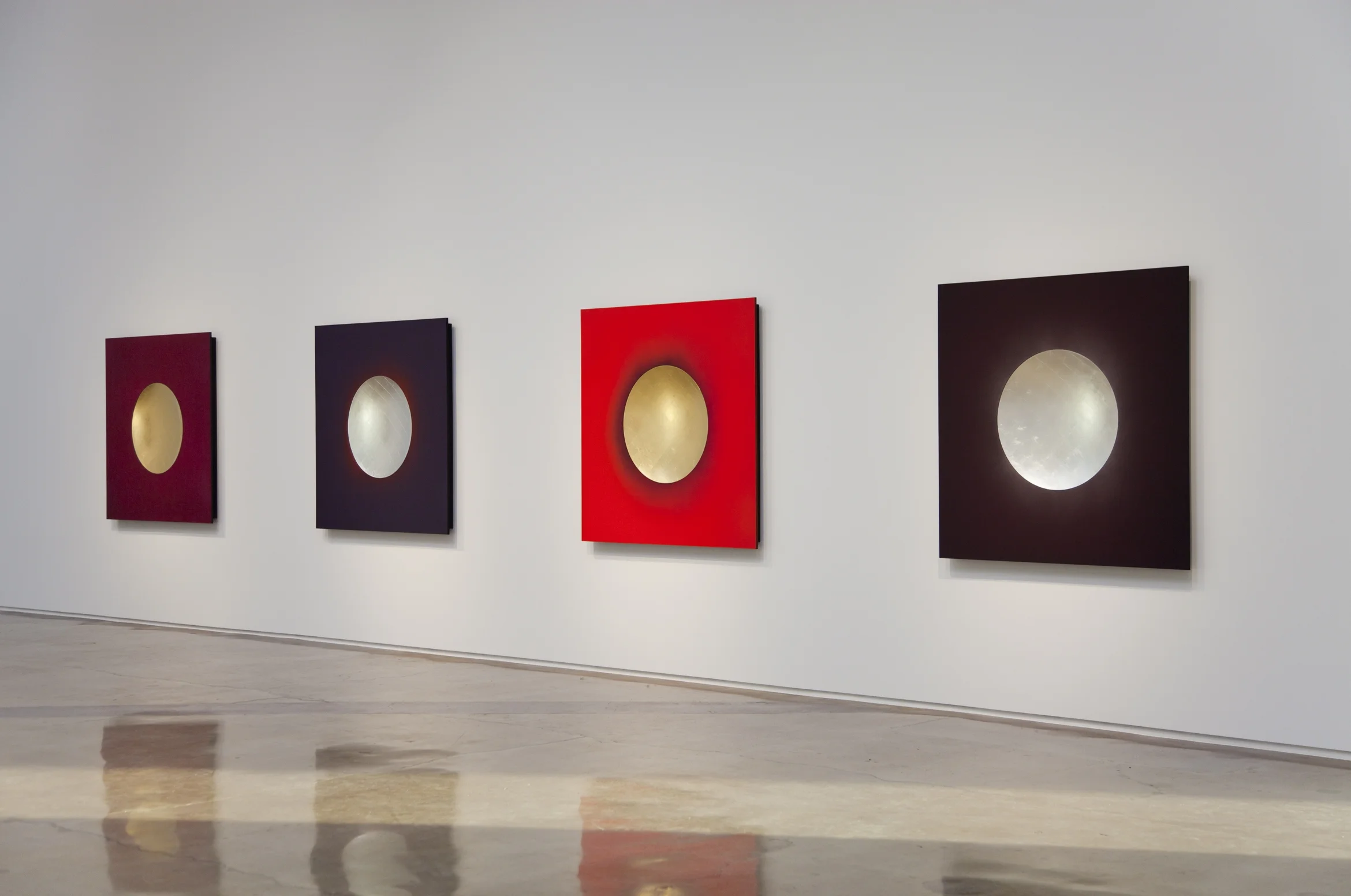
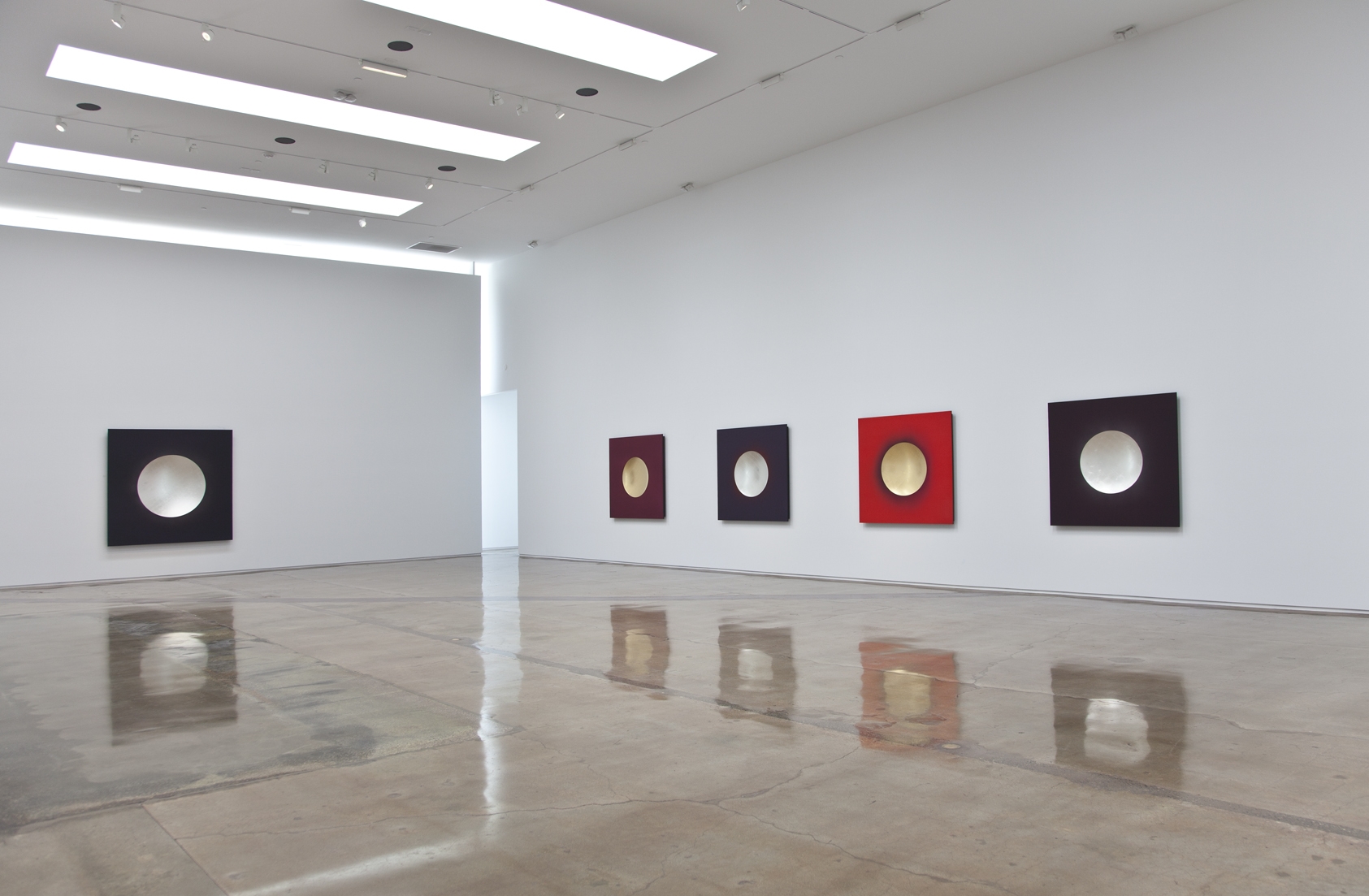
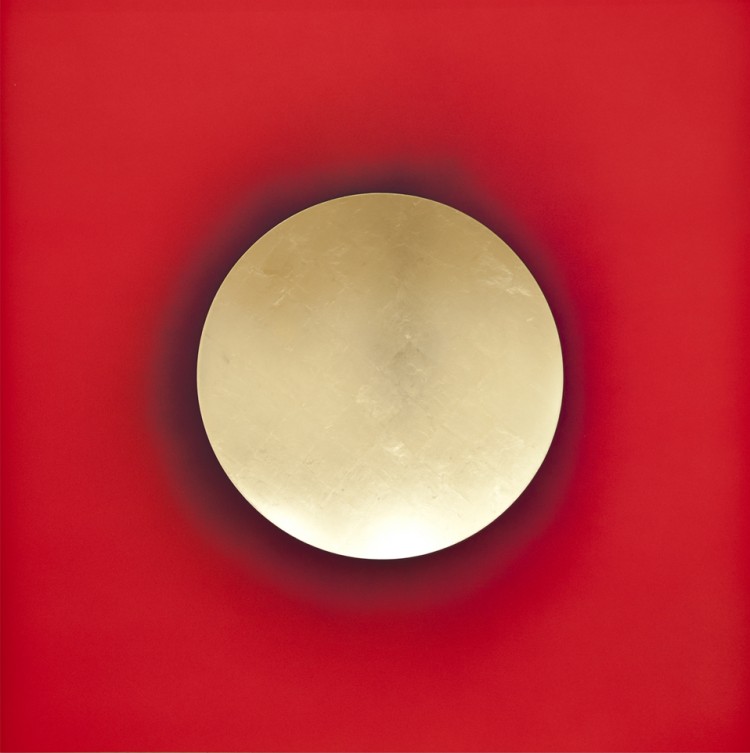
Read MoreThe works in Lita Albuquerque’s exhibition “Embodiment” continues her investigation of space, depth and perception. These new wall pieces are large-scale sculpture/paintings in which lush earth-toned raw pigments are juxtaposed with concave disks covered in gold or silver leaf.
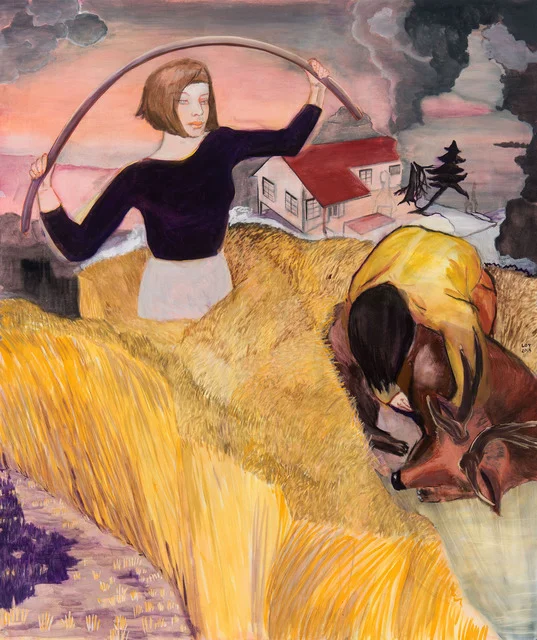
Read MoreThere’s something you can’t quite put your finger on in German artistRosa Loy’s large format compositions of enigmatic female subjects. Like most artists associated with the New Leipzig School—including her husband Neo Rauch—Loy produces figurative works executed with an acute emphasis on technique. Her dedication to highly technical figuration aside, Loy’s works are nothing short of mystifying.
Read More“There was a point in my career in the fall of 1977 when I decided to give up painting as I had known it in order to go back to the history of painting, to its very beginning where the first artists were using the earth to draw upon its surface, as a need to understand it historically.”
Read More