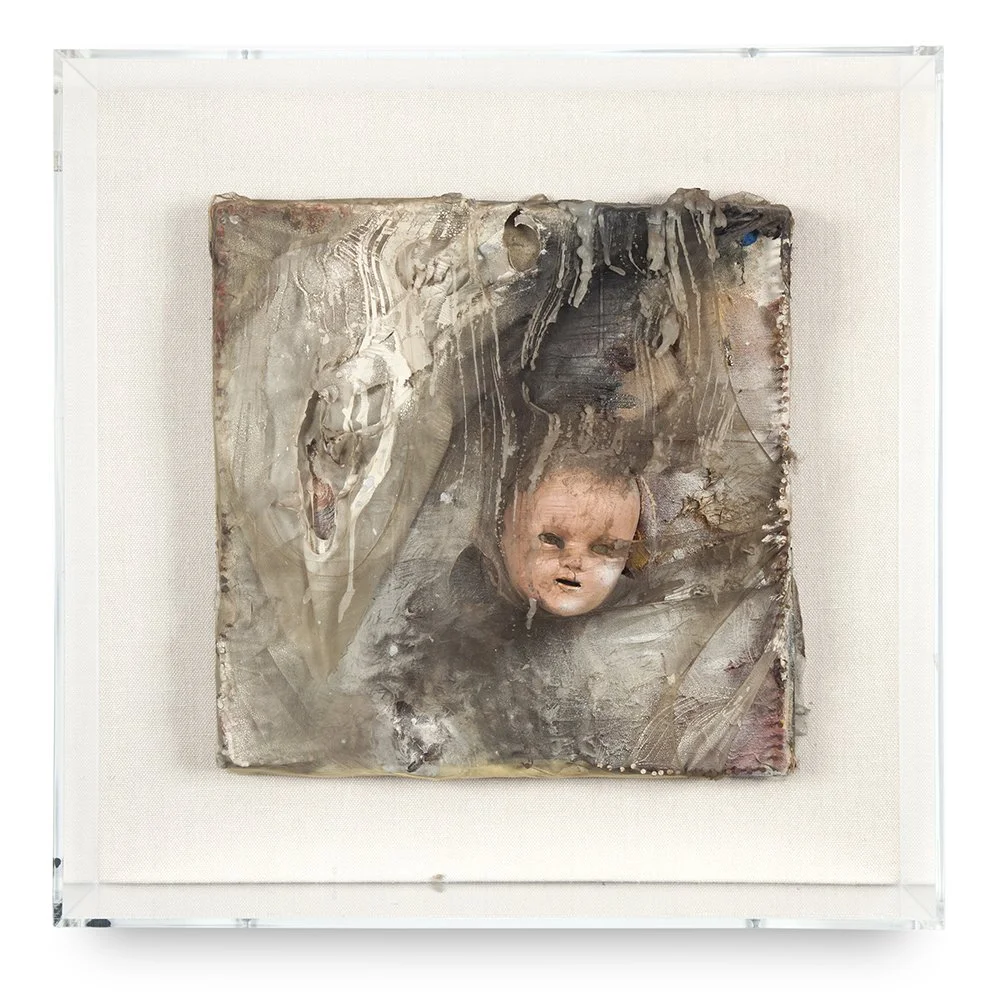
Kohn Gallery is pleased to announce its participation in Art Basel 2022, presenting a cross-generational dialogue between two interdisciplinary American artists: internationally recognized Bruce Conner (1933-2008) and emerging LA-based artist Chiffon Thomas (b. 1991). The booth will showcase their distinctive figurative assemblages, which find an aesthetic kinship in their deconstruction and reconfiguration of the body through prisms of race, gender, sexuality, and religion.
In the face of censorship, Conner transcended mainstream American art practices. A central figure of the Beat Generation and West Coast countercultural movement, Conner employed a chameleonic practice spanning painting, drawing, collage, photography, experimental film, and assemblage. Rejecting materialism and embracing spirituality, his visceral works present a complex portrait and critique of post-war American culture; one where consumerism and sexuality intertwine and the threat of nuclear destruction looms large.
The Chicago-born Chiffon Thomas examines the self in the face of the American political apparatus from their perspective as a trans person of color. Rooted in the process of becoming—a transition from dysmorphia to metamorphosis—Thomas’ powerful figurative assemblages interpret personal feelings of nostalgia, longing to belong, and affirmations of self-identity. Thomas utilizes found objects such as rebar ties from skyscrapers to construct bodies that are at once vulnerable and immutable. Likewise, Thomas’ religious upbringing permeates their practice, calling upon the physicality of artifacts and family snapshots to construct an emotional portrait. The melding together of sculpted flesh with bible pages and embroidery floss becomes a site for the collision of the autobiographical and the collective; of memory and history.
In their reciprocal critiques of American culture and politics, Conner and Thomas cultivate a shared iconography of utilitarian materials. For Conner, found objects carve a path to the personal. In CHERUB (1959), a doll’s head enmeshed in a nylon, wax, and paint encrusted canvas becomes a reflection of the vulnerability inherent in the artist’s vision of the world. Thomas takes a more direct approach, with meaning applied to the function of the material itself. Houses composed of bibles are stitched together roughly with fraying threads and suspended from the ceiling, the windows carved into the leather covers with a care that belies their fashioning. Thomas asks: How do you construct a home out of religious and domestic debris? As Conner noted in a 1964 interview, “there is always a dialogue between objects and people.” In bridging a gap of fifty years, this joint presentation advances a link between two quintessential American artists and the acts of resistance required to sustain the self in the face of political turbulence.