Chiffon Thomas, Progeny

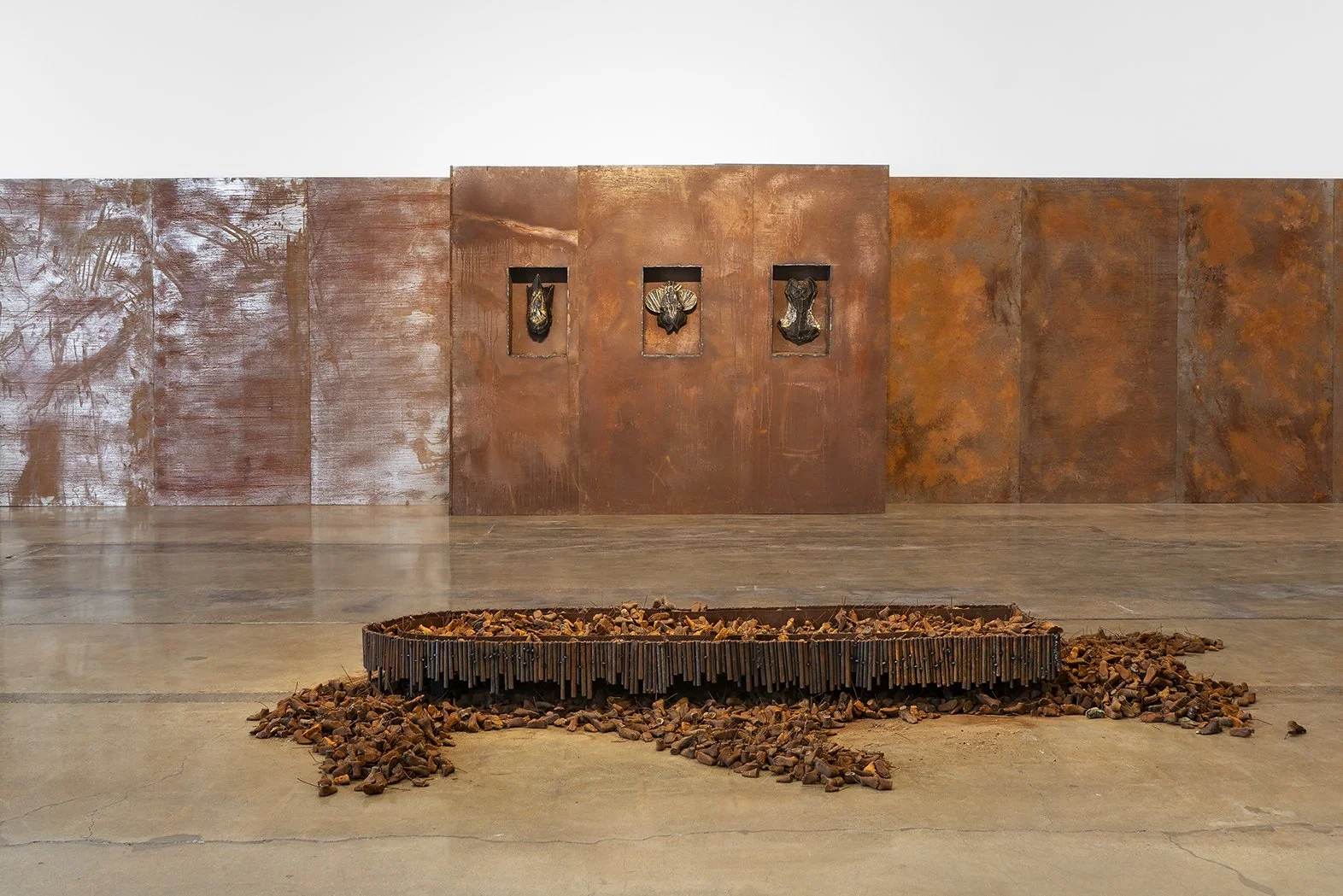
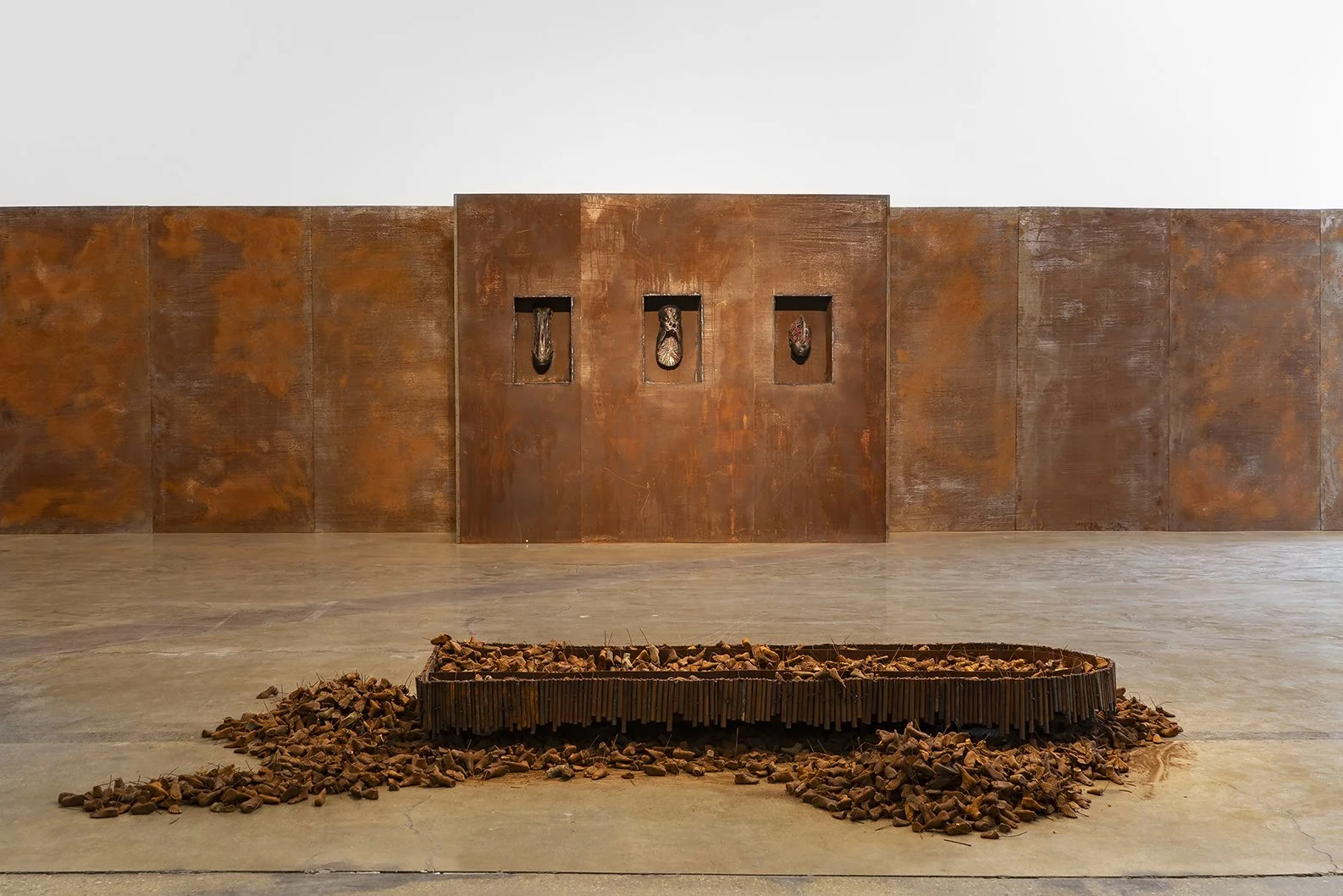
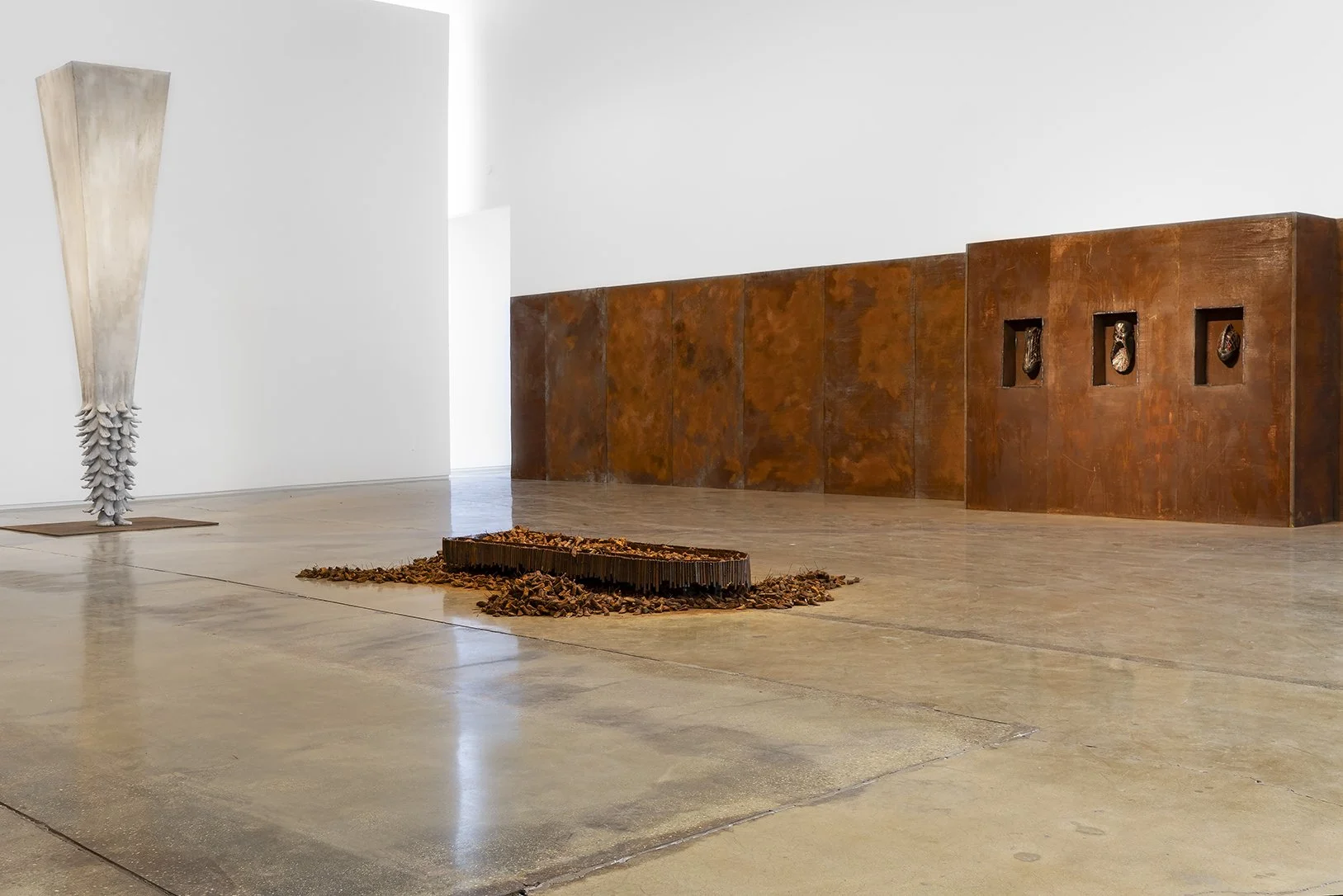
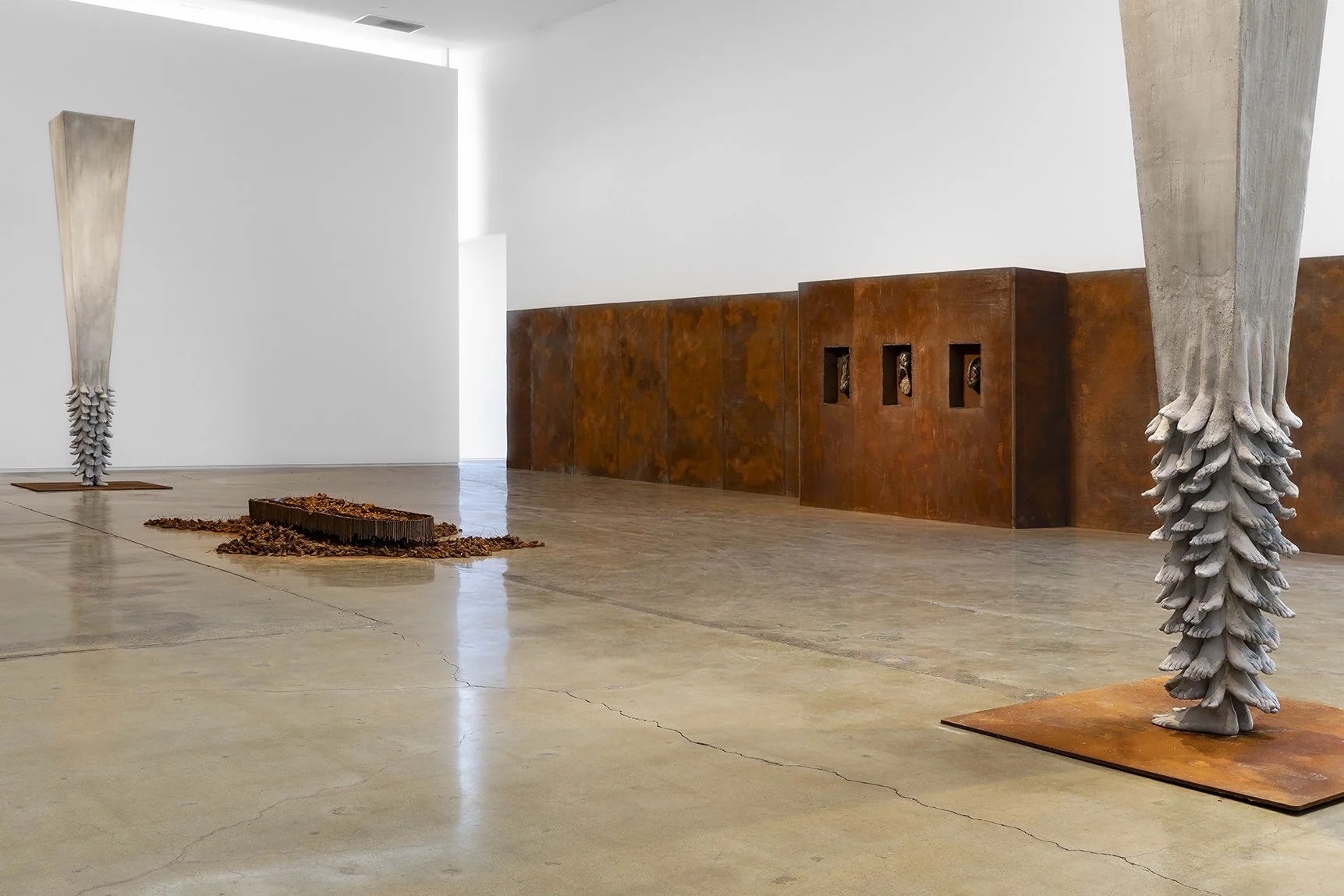
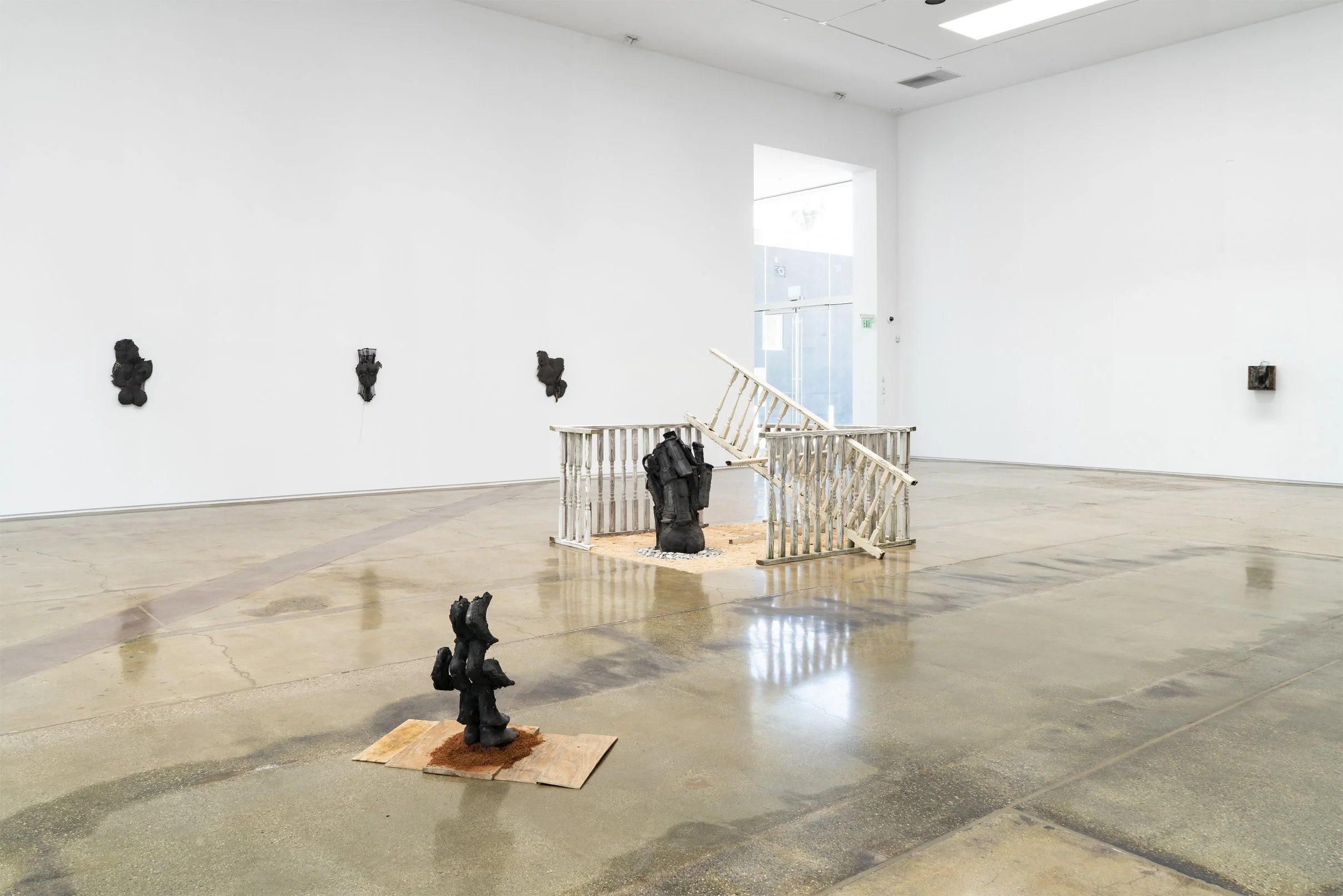
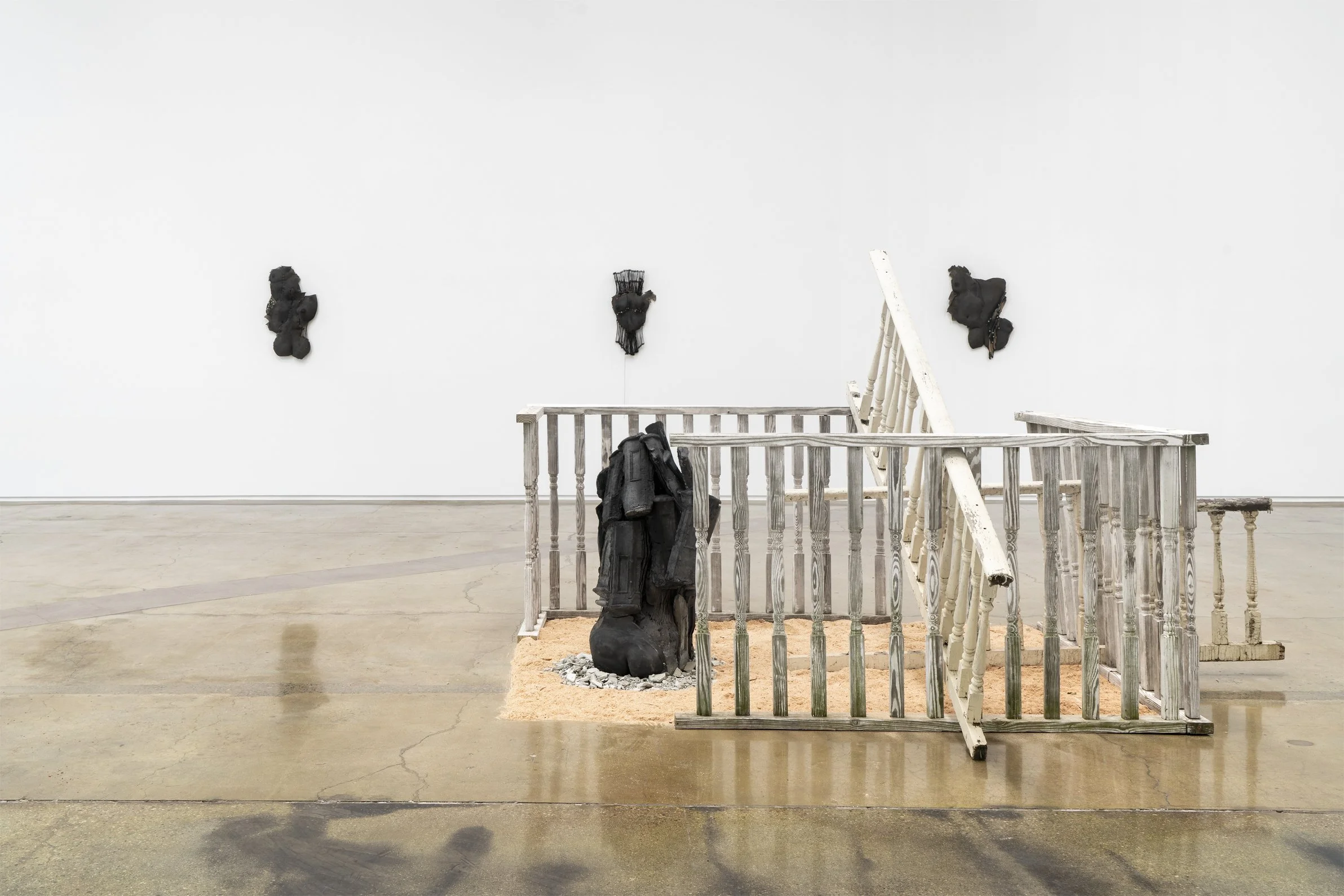
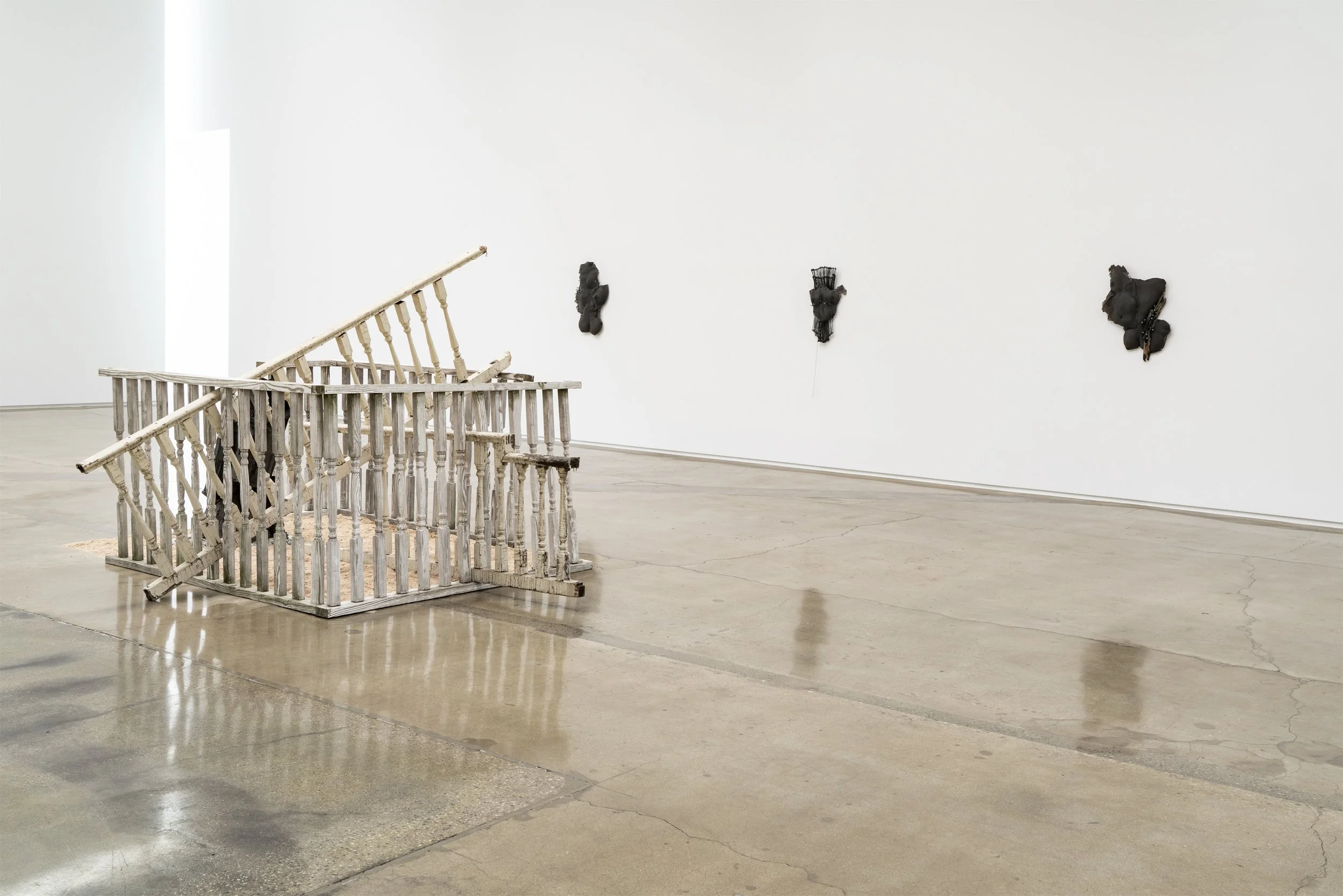
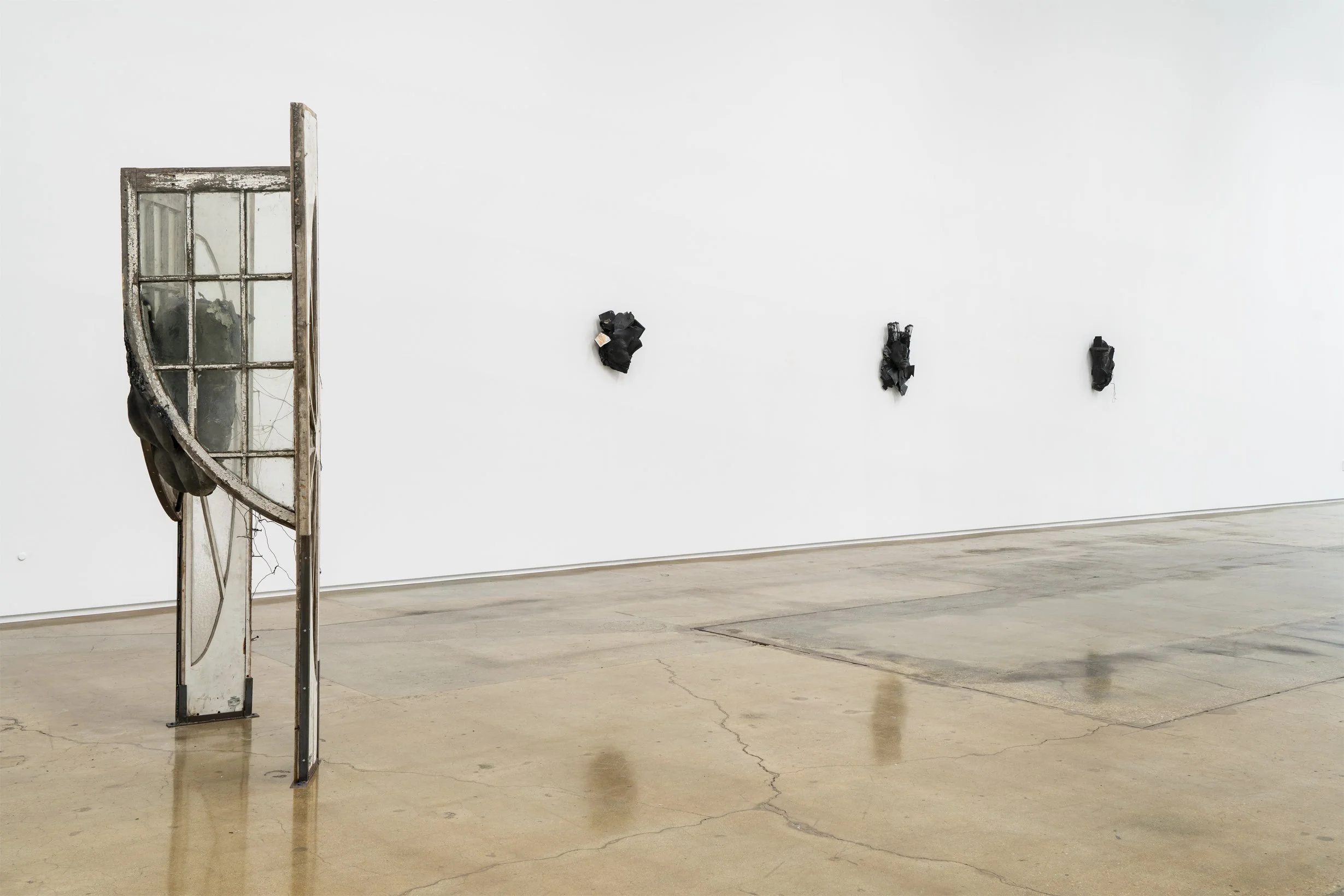
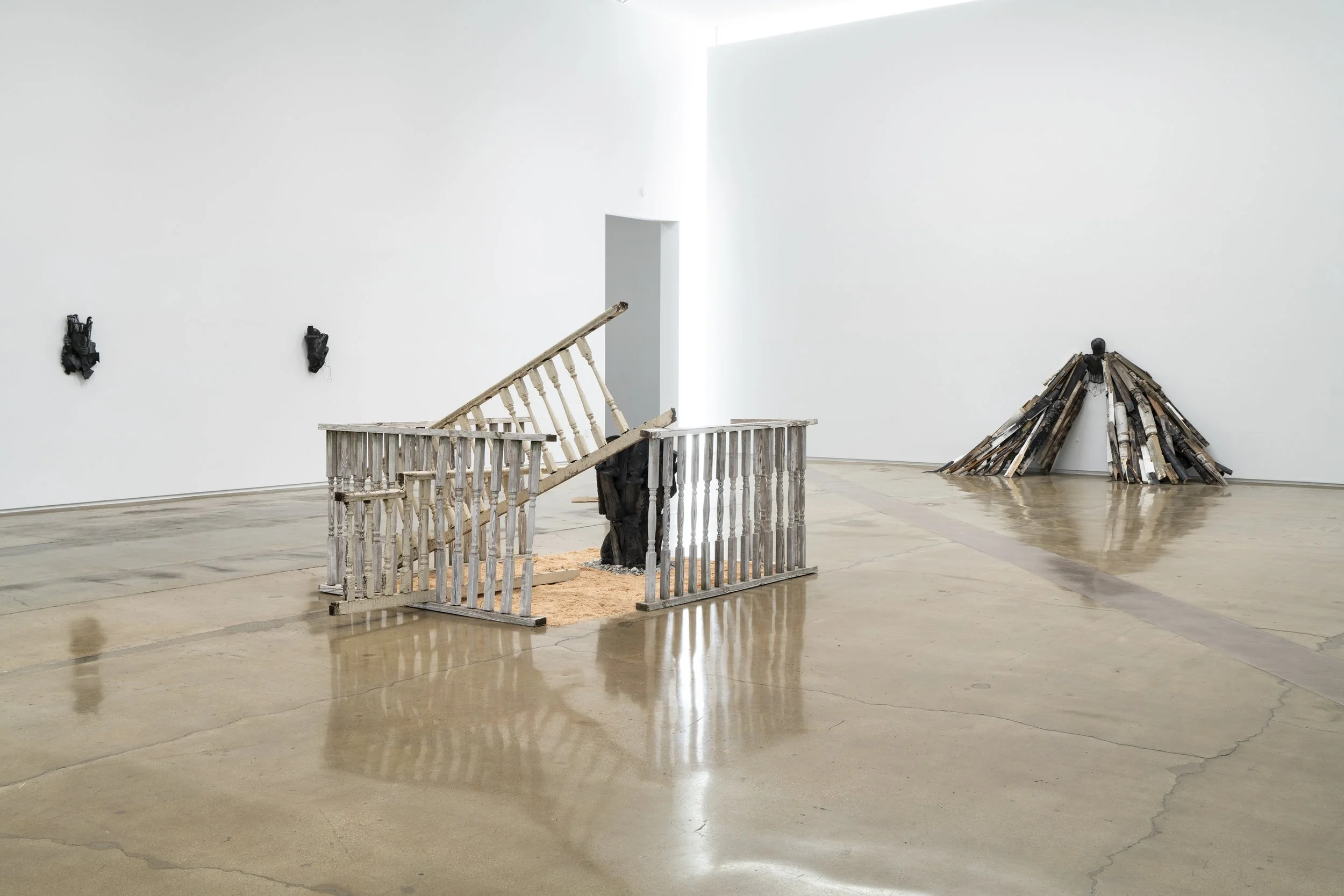
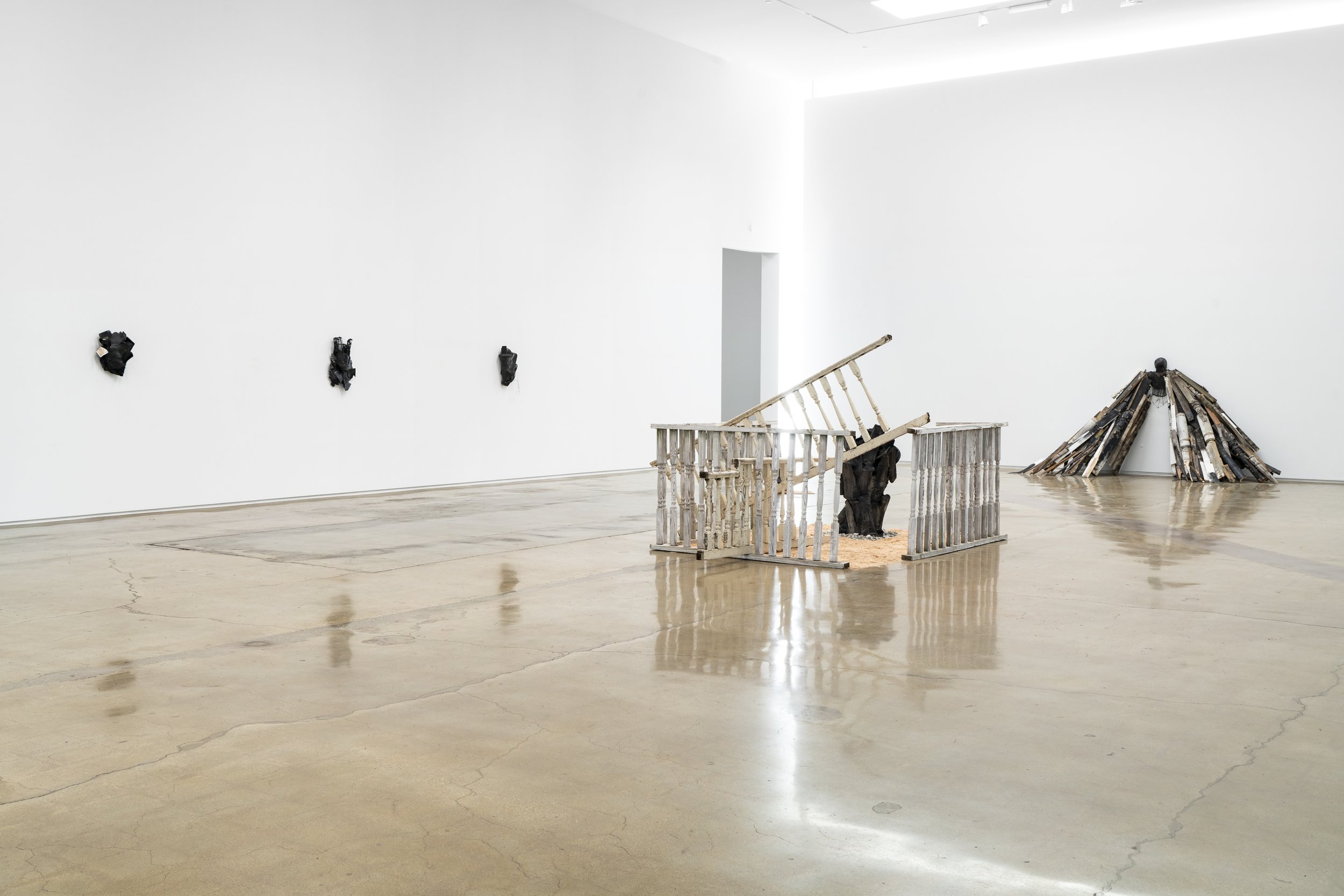
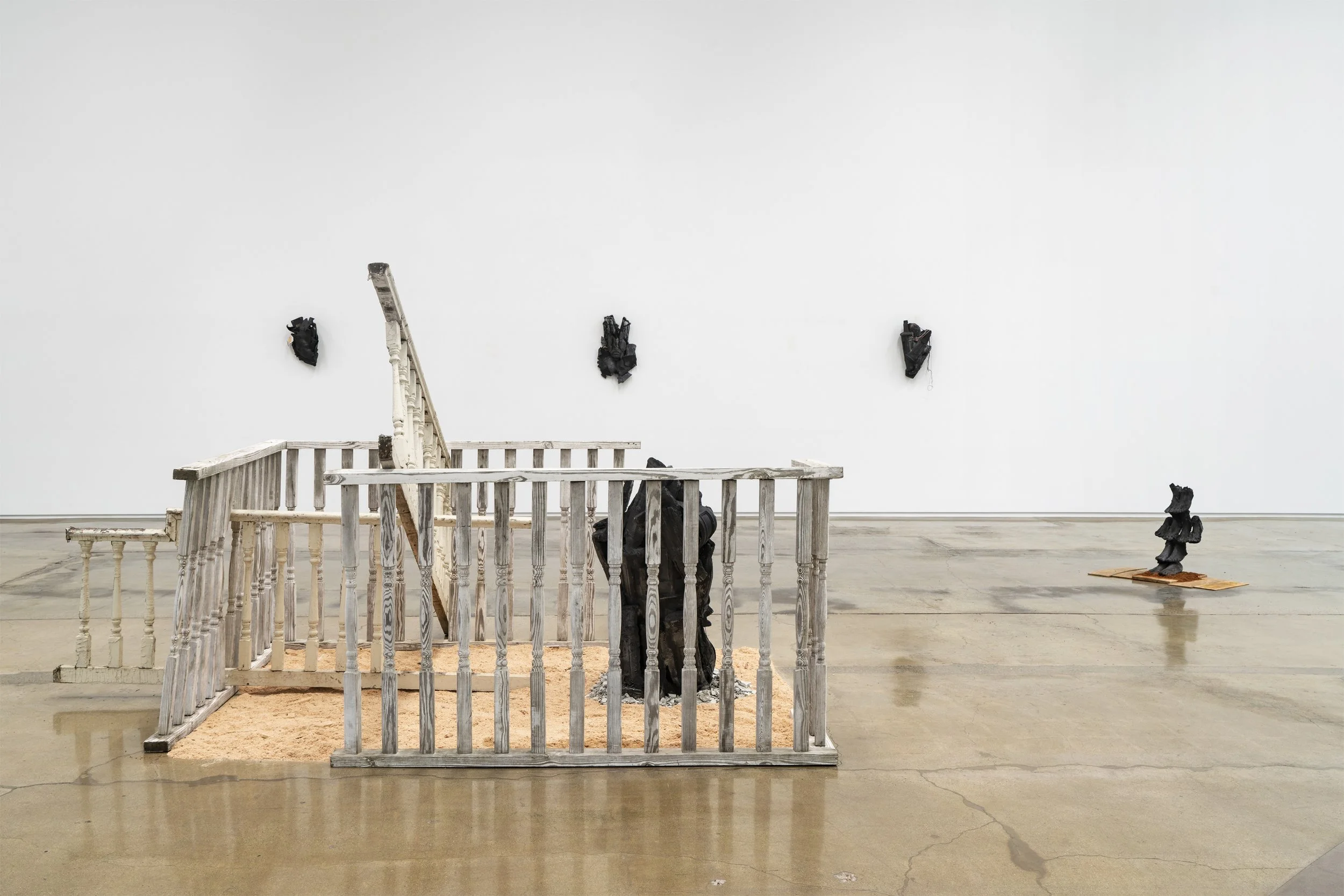
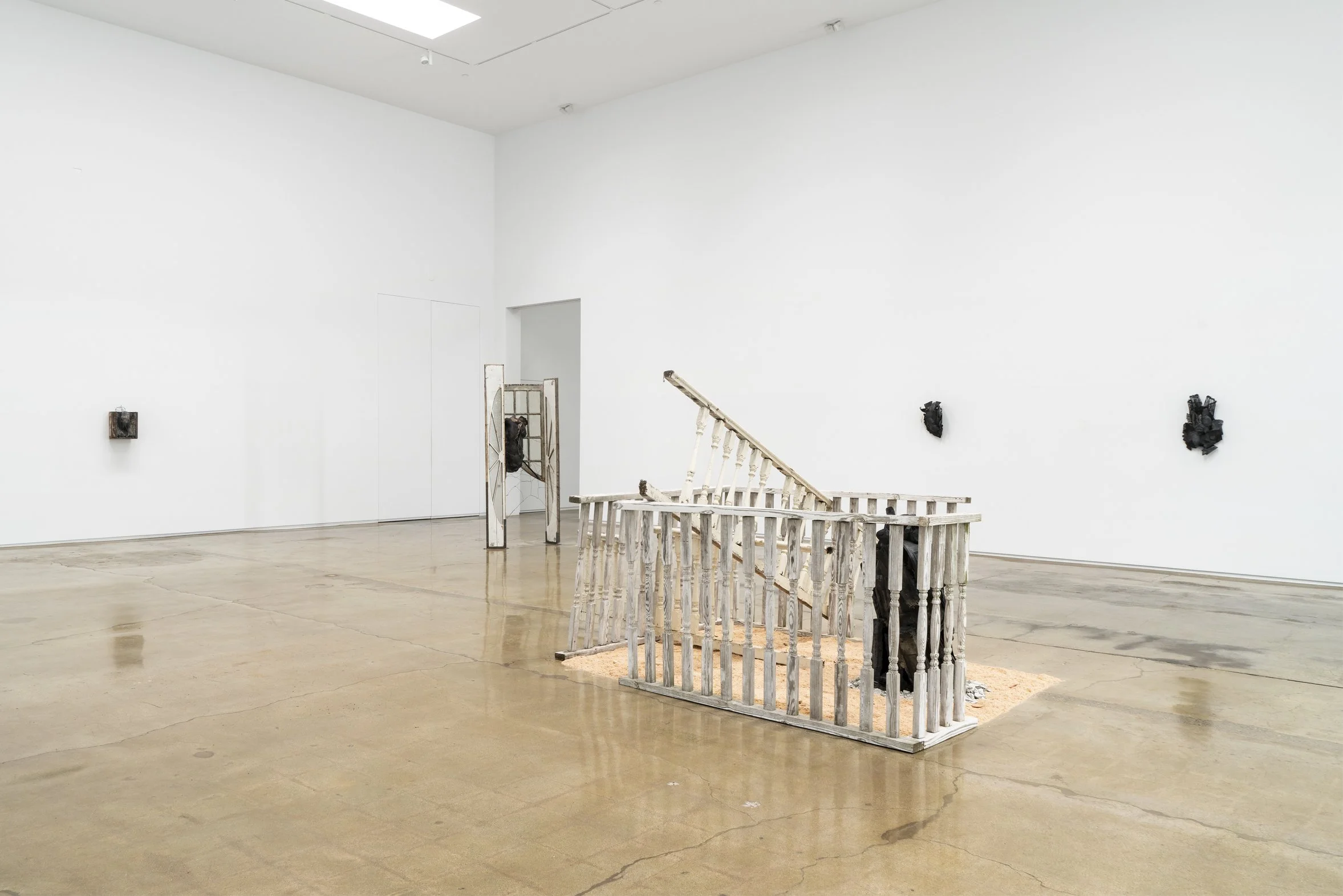
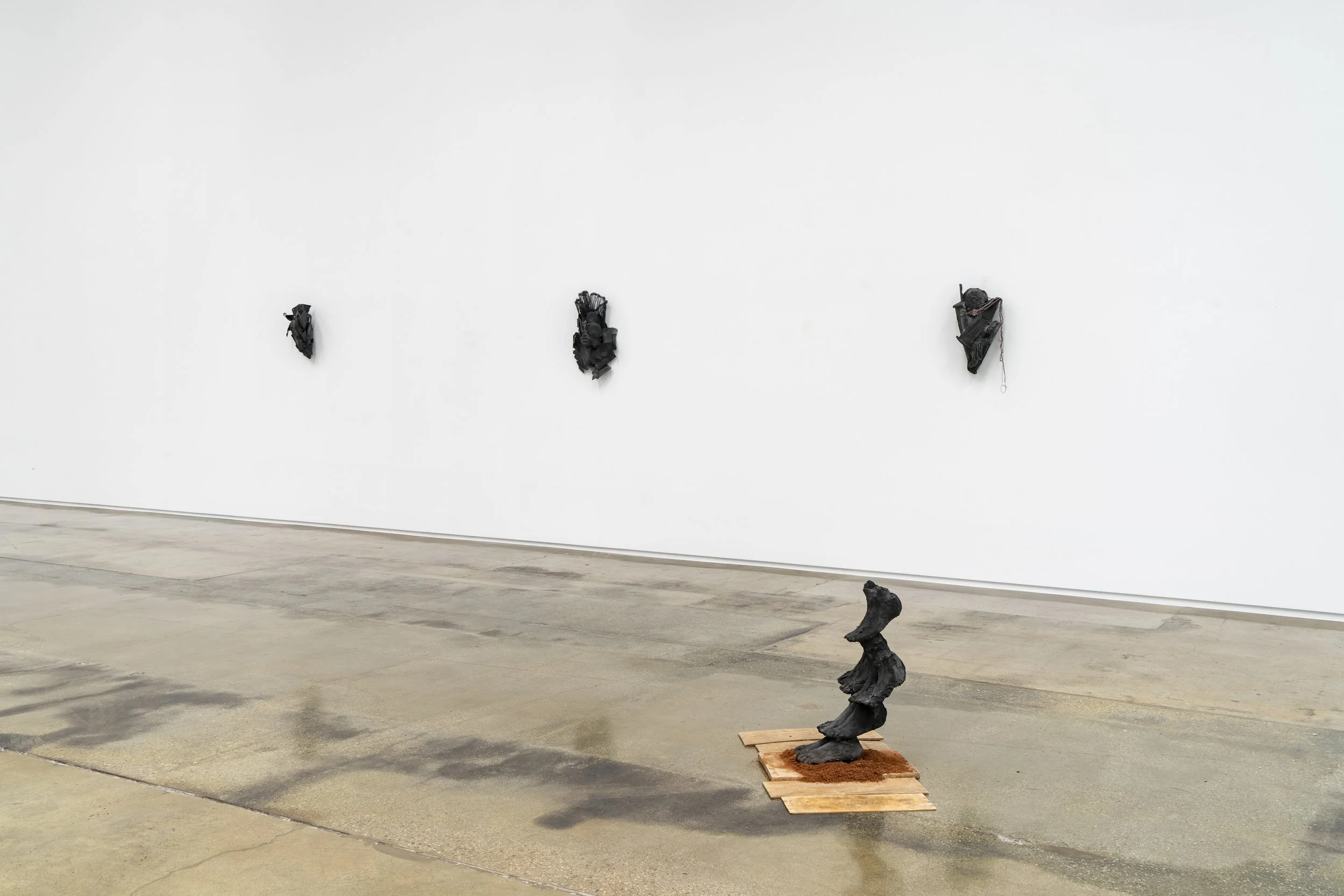
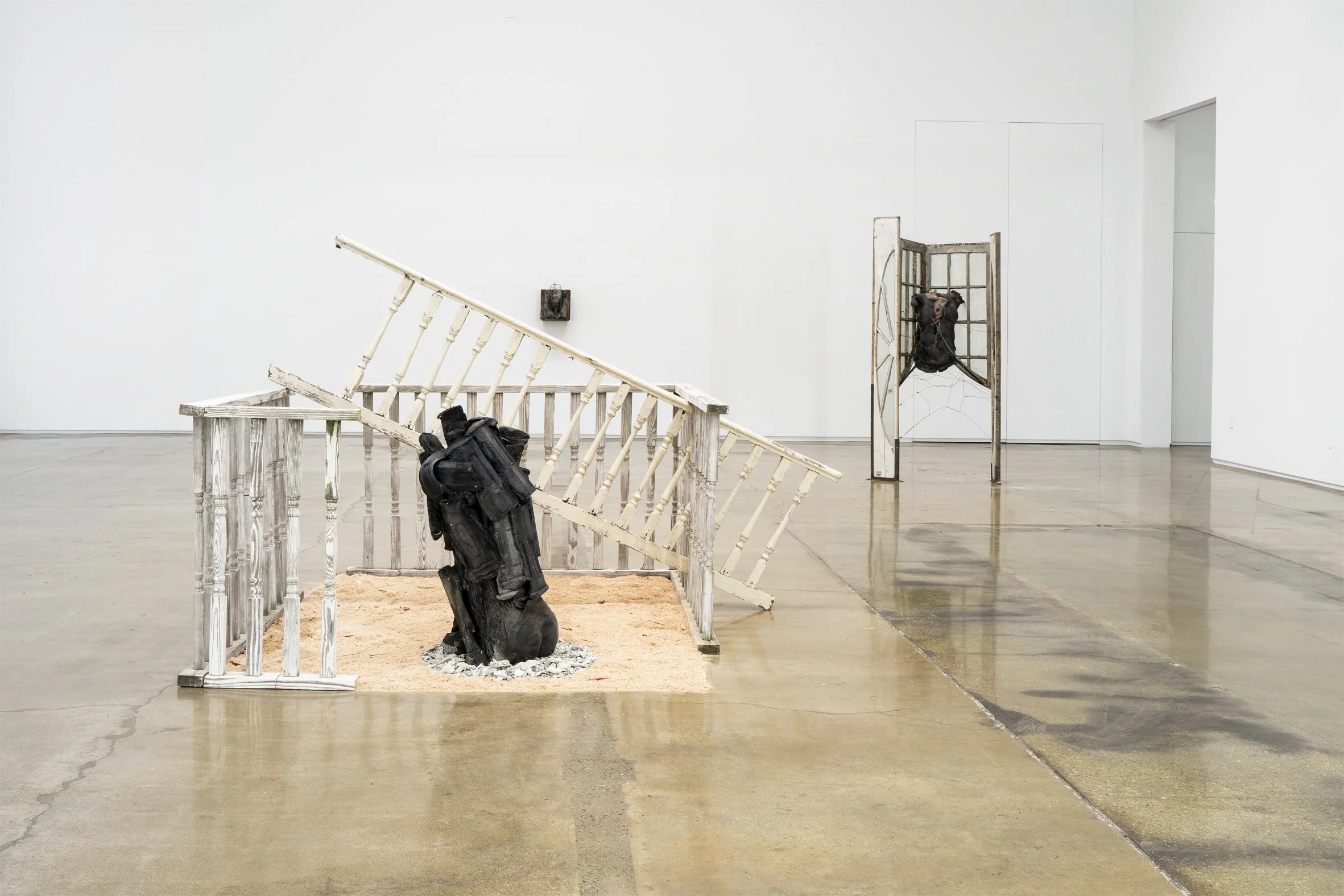
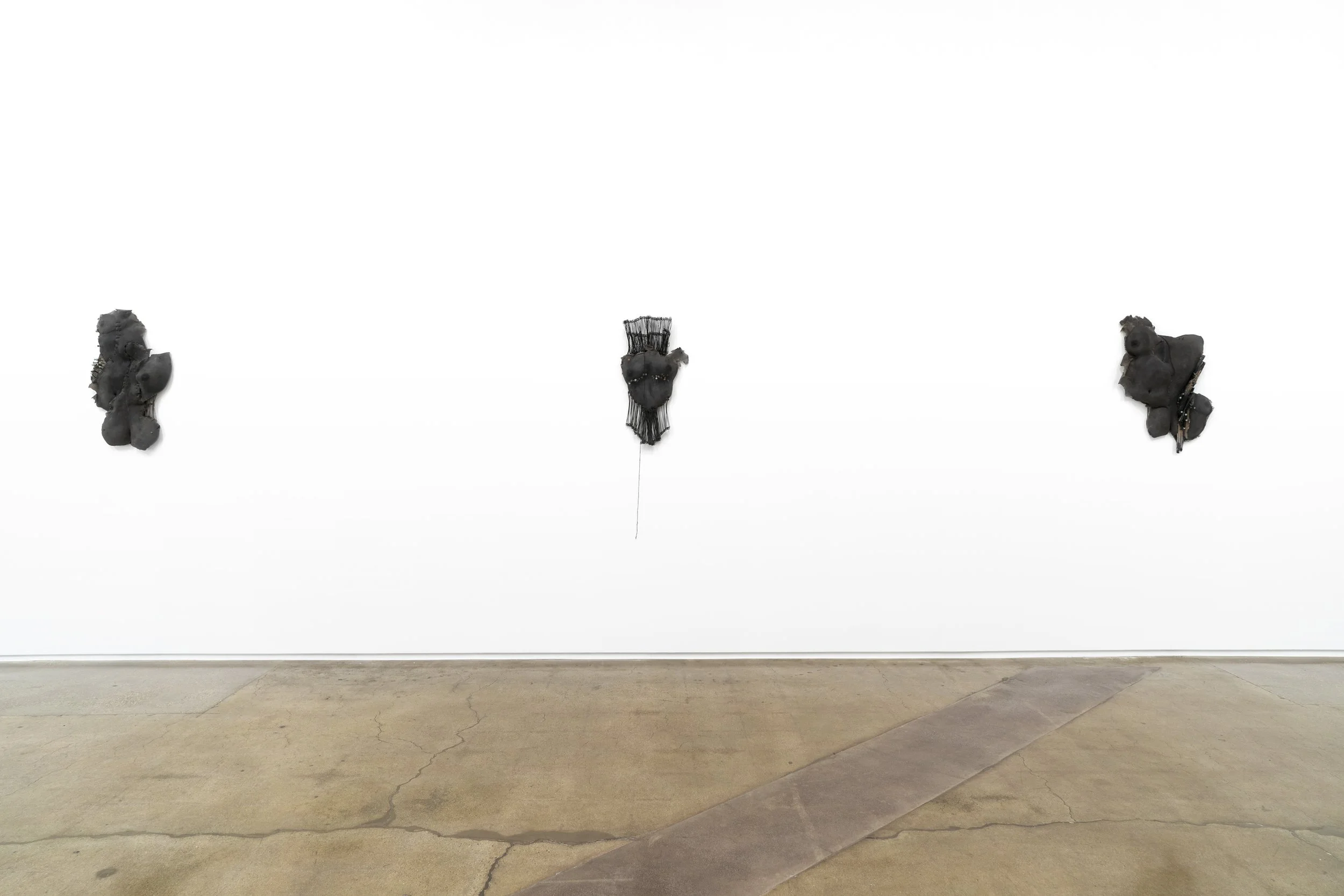
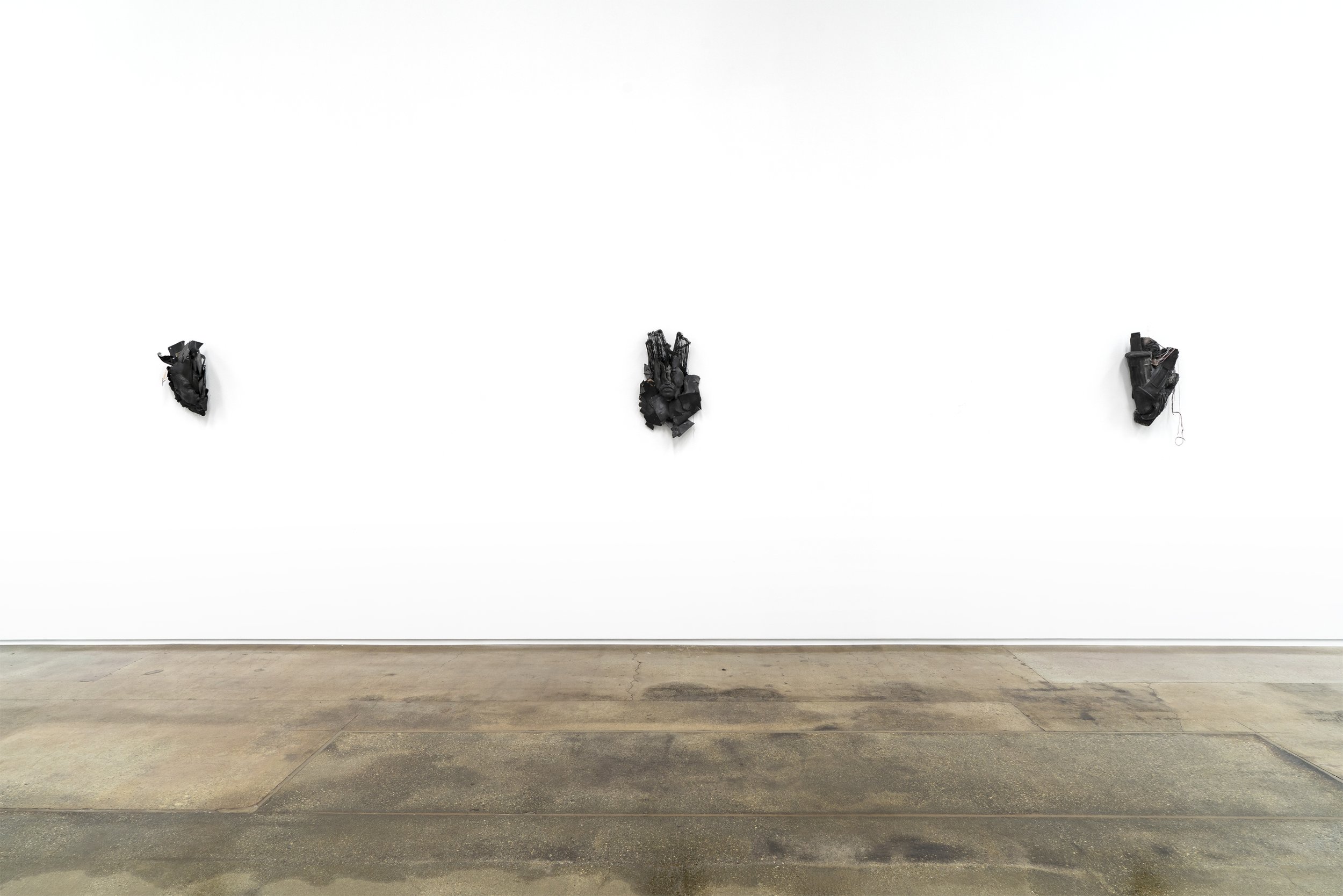
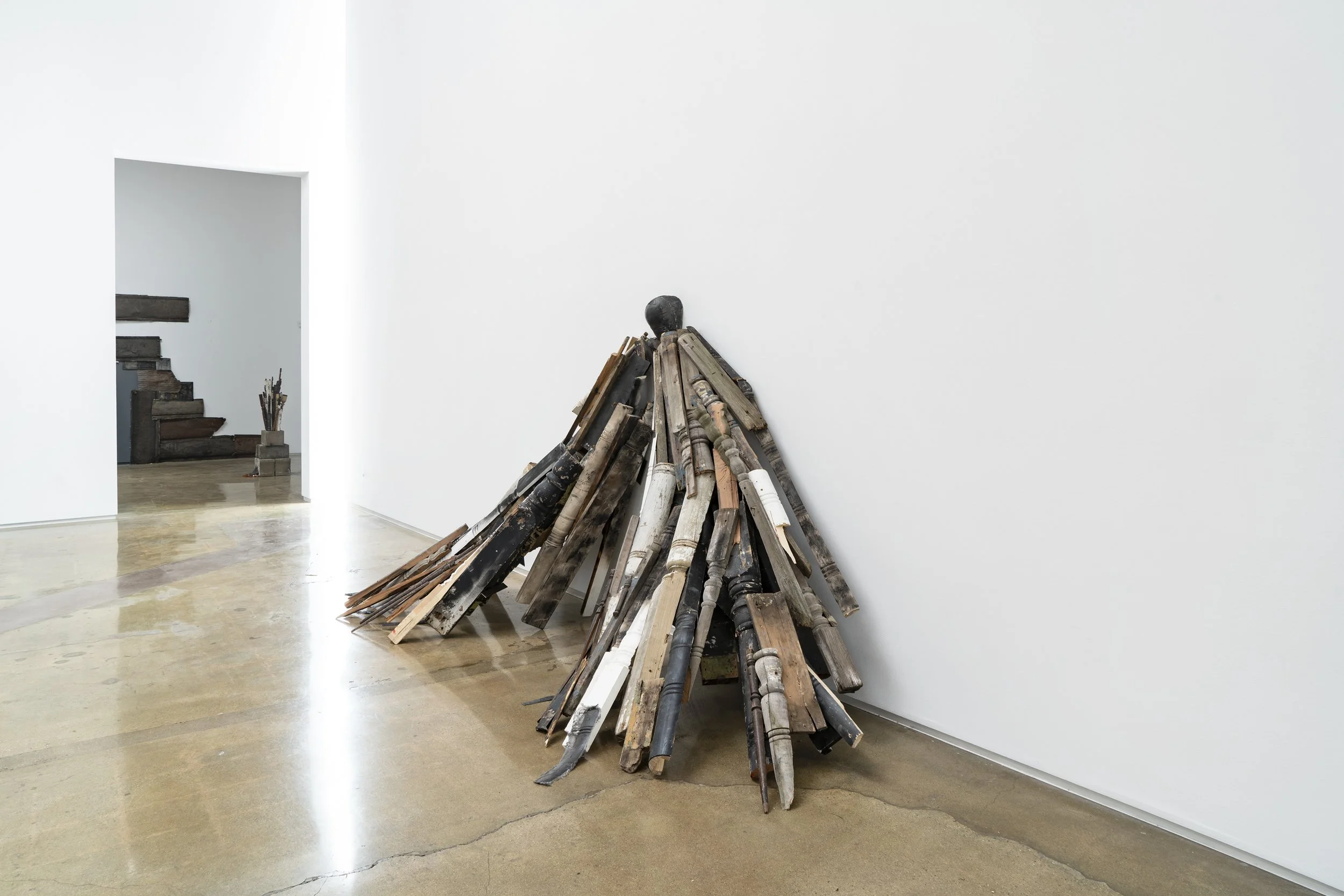
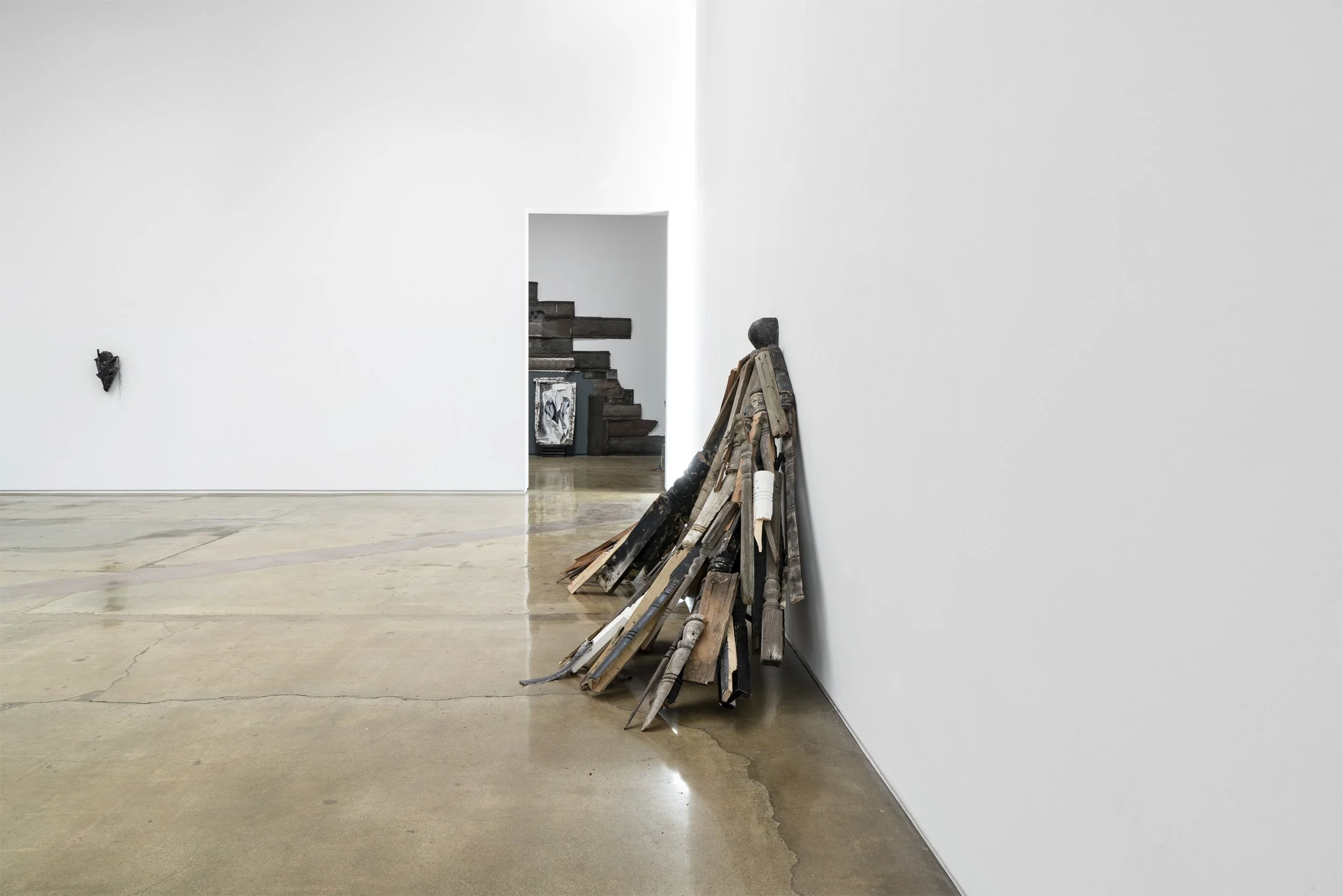
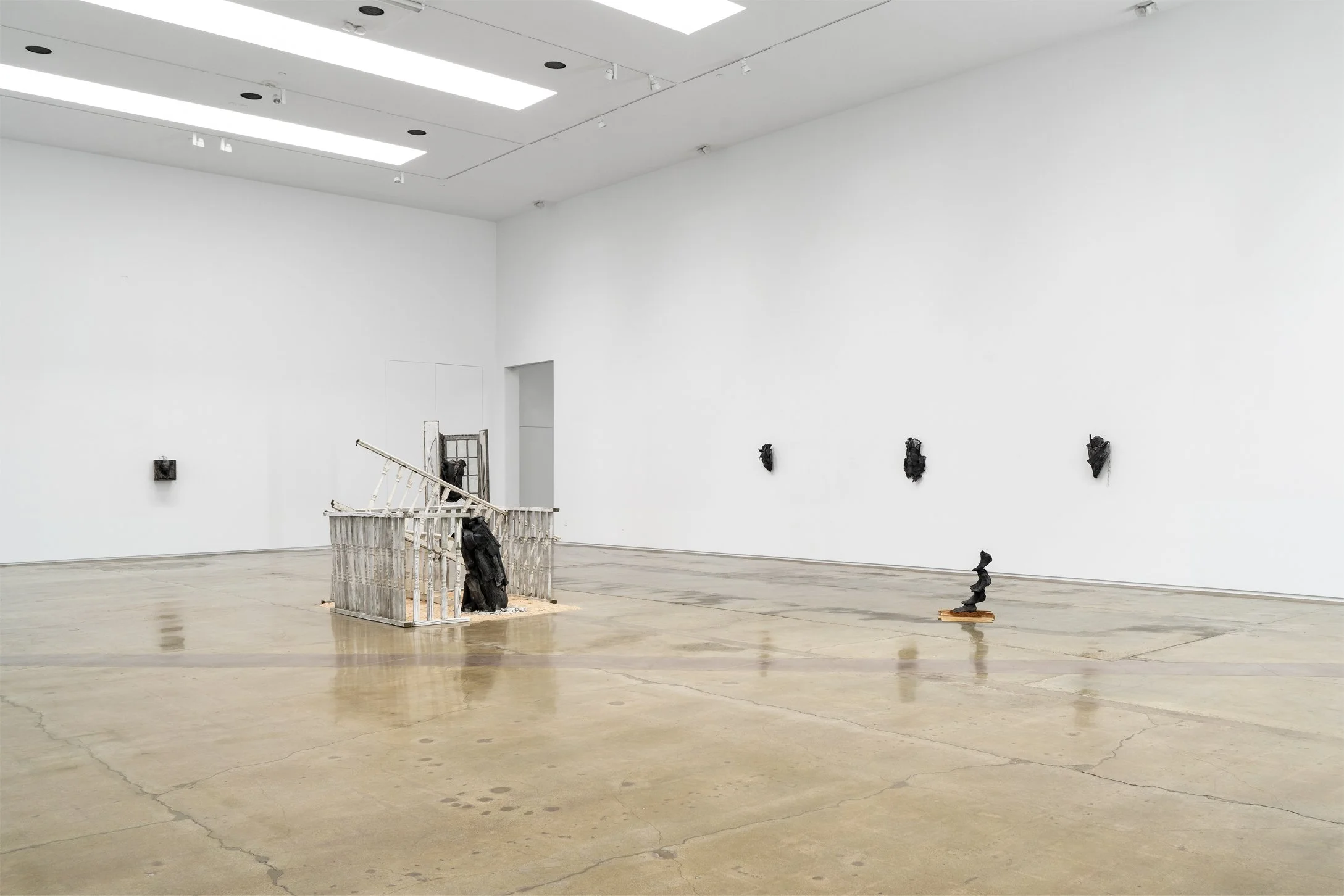
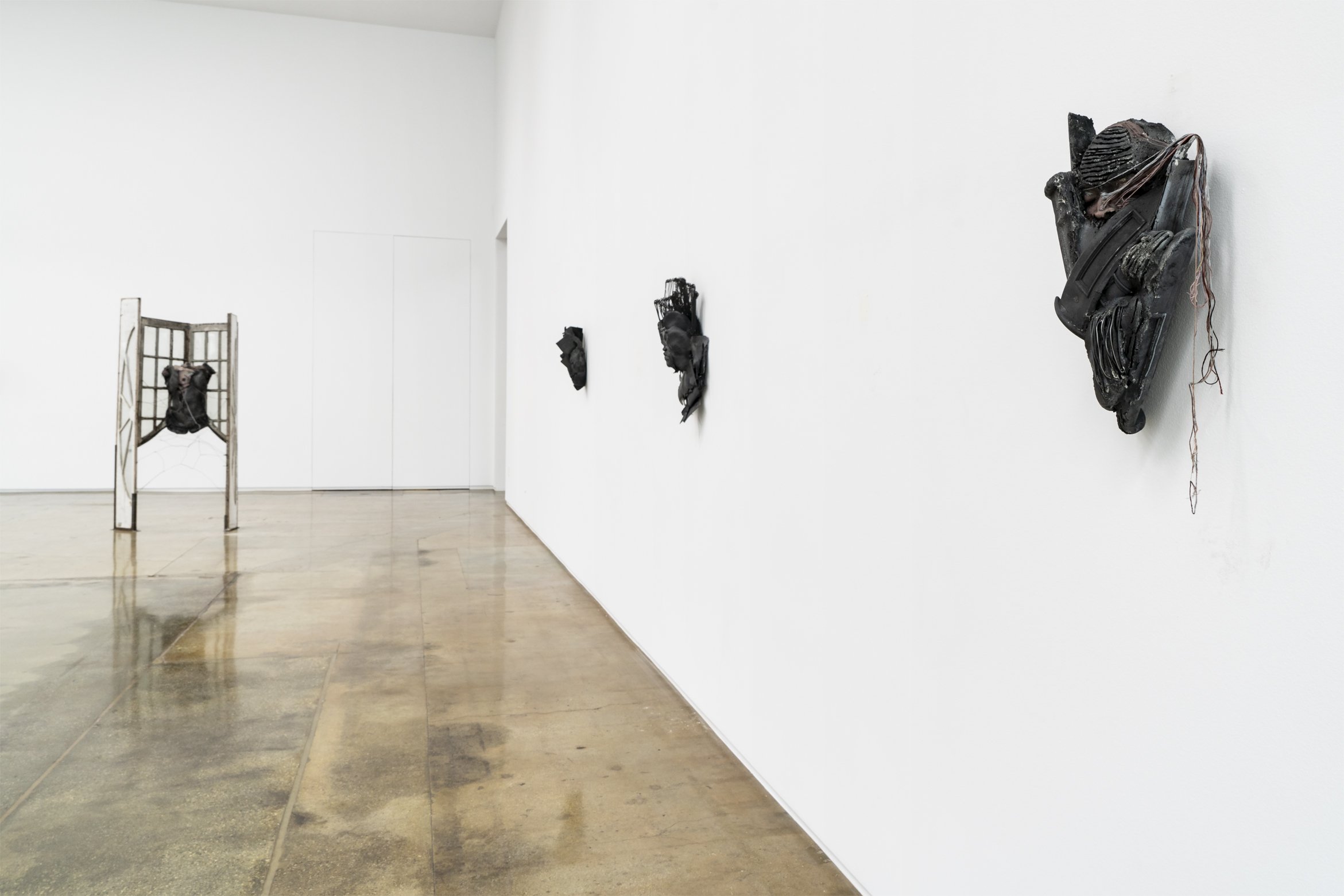
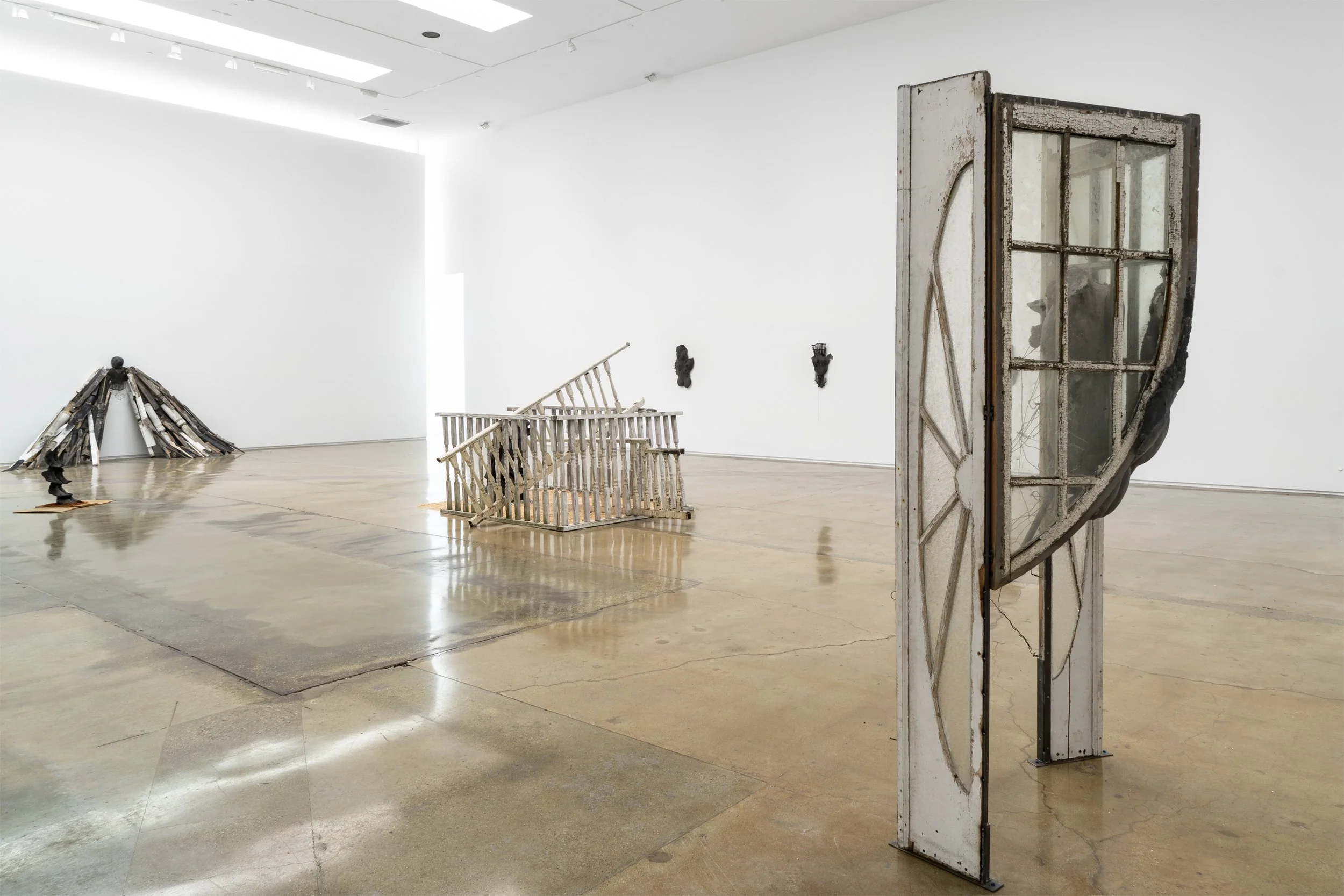
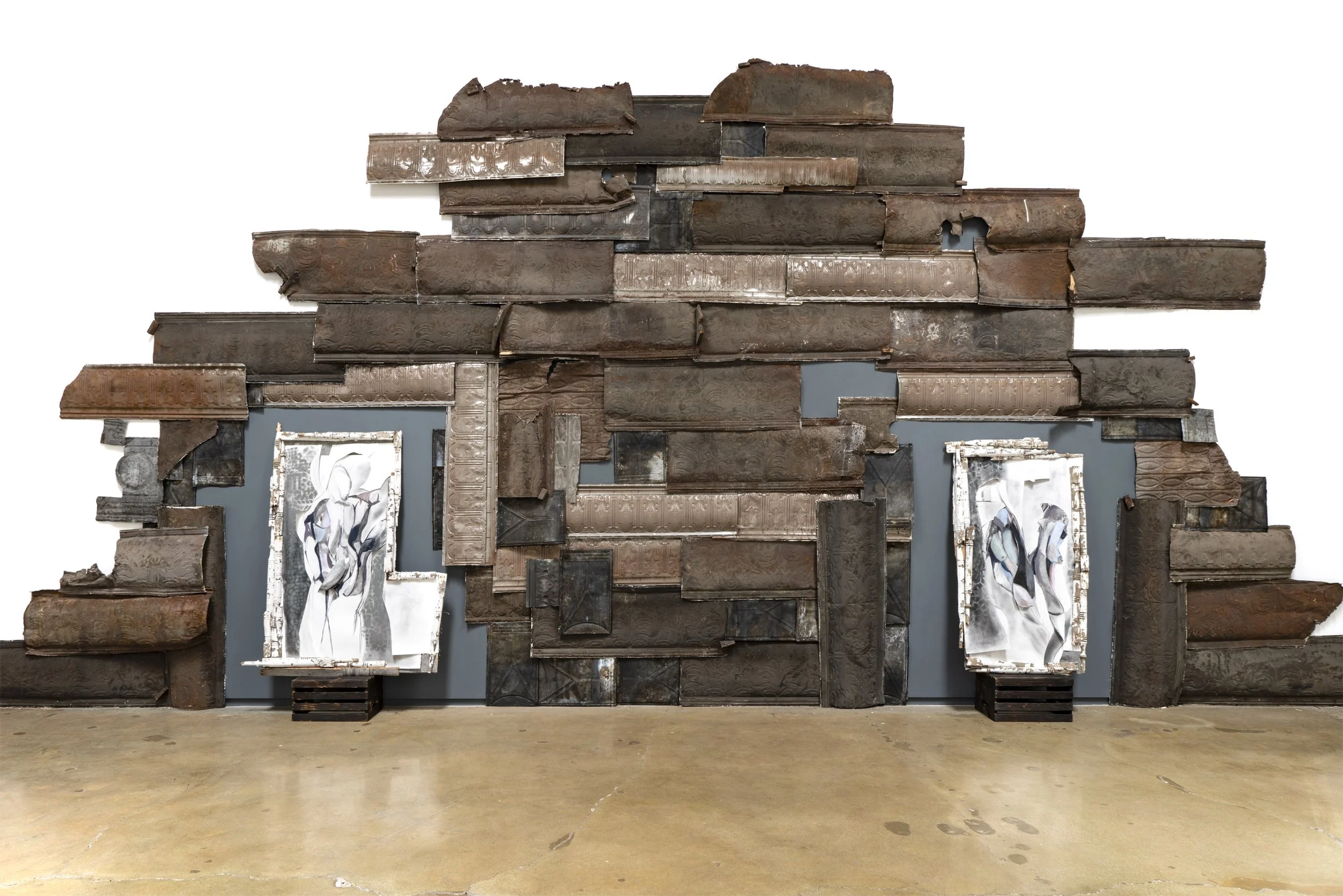
Michael Kohn Gallery is pleased to announce Progeny, an exhibition of new works by Los Angeles-based artist Chiffon Thomas. For his second exhibition with the gallery, Thomas will present a group of monumental architectural sculptures, a body of work continuing from his recent solo exhibition, The Cavernous, at The Aldrich Contemporary Art Museum, Ridgefield, CT. This series will be his latest presentation in Los Angeles since his participation in the Hammer Museum’s biennial Made in L.A. 2023: Acts of Living. The exhibition will be on view from June 20 through August 17, 2024.

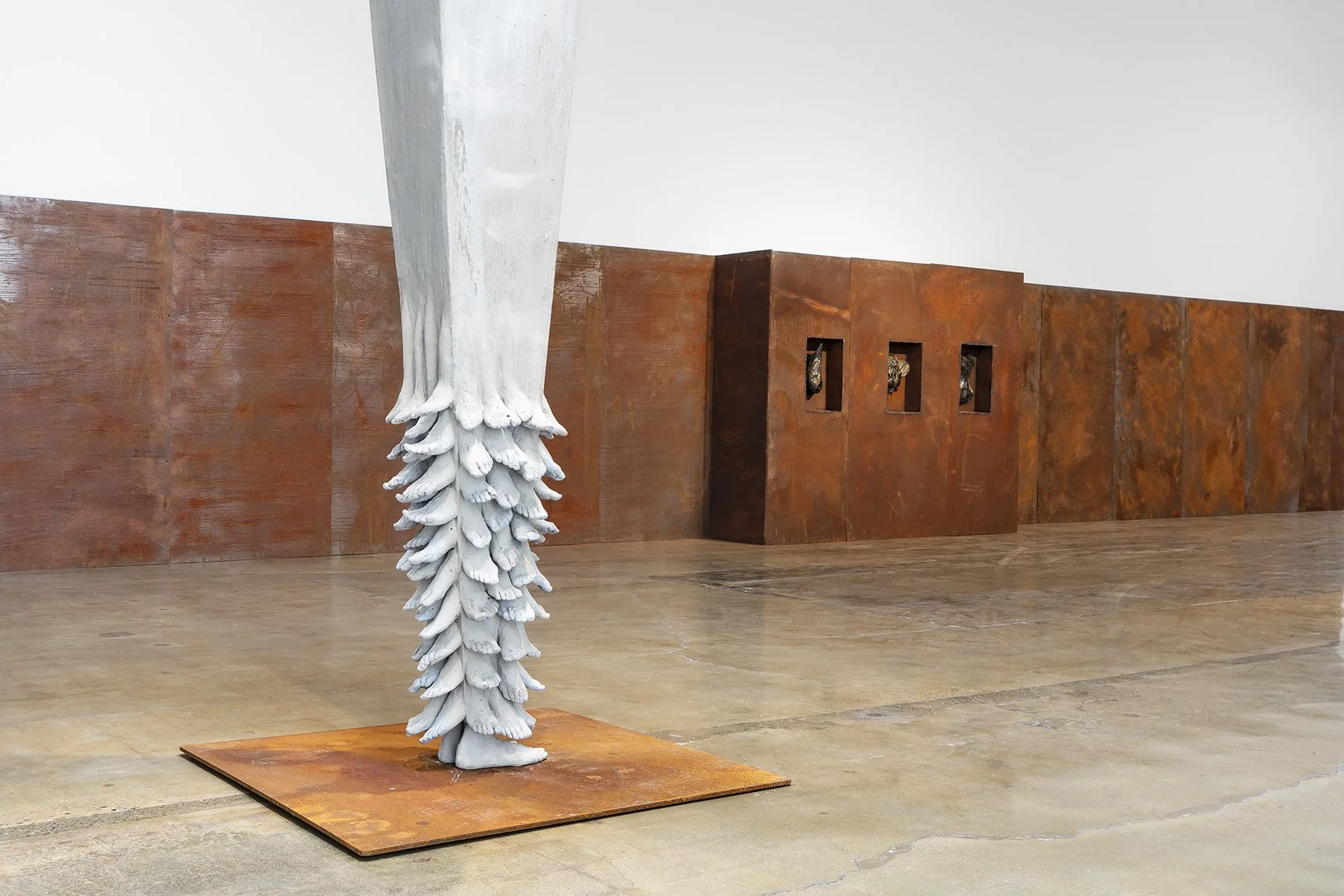
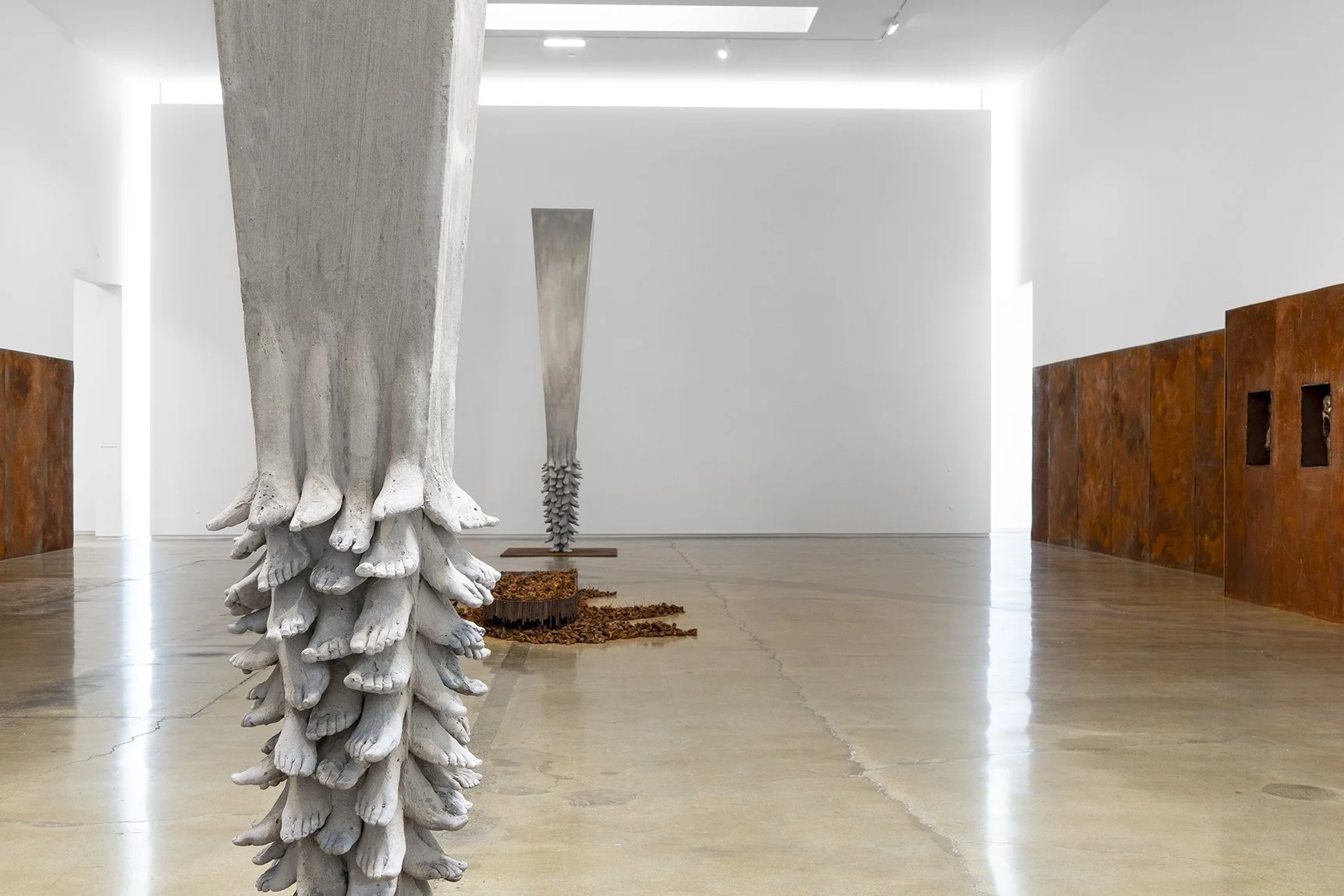
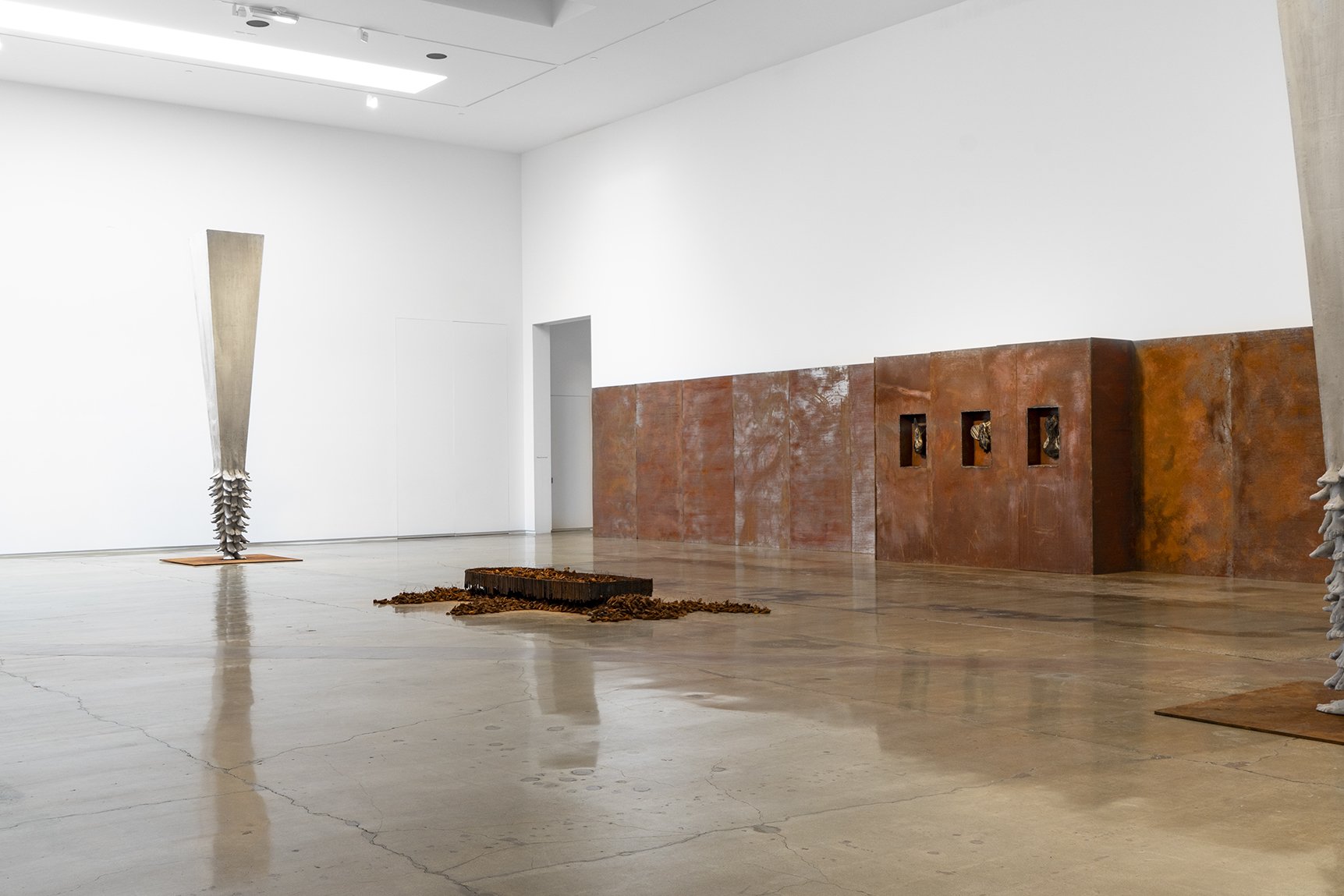
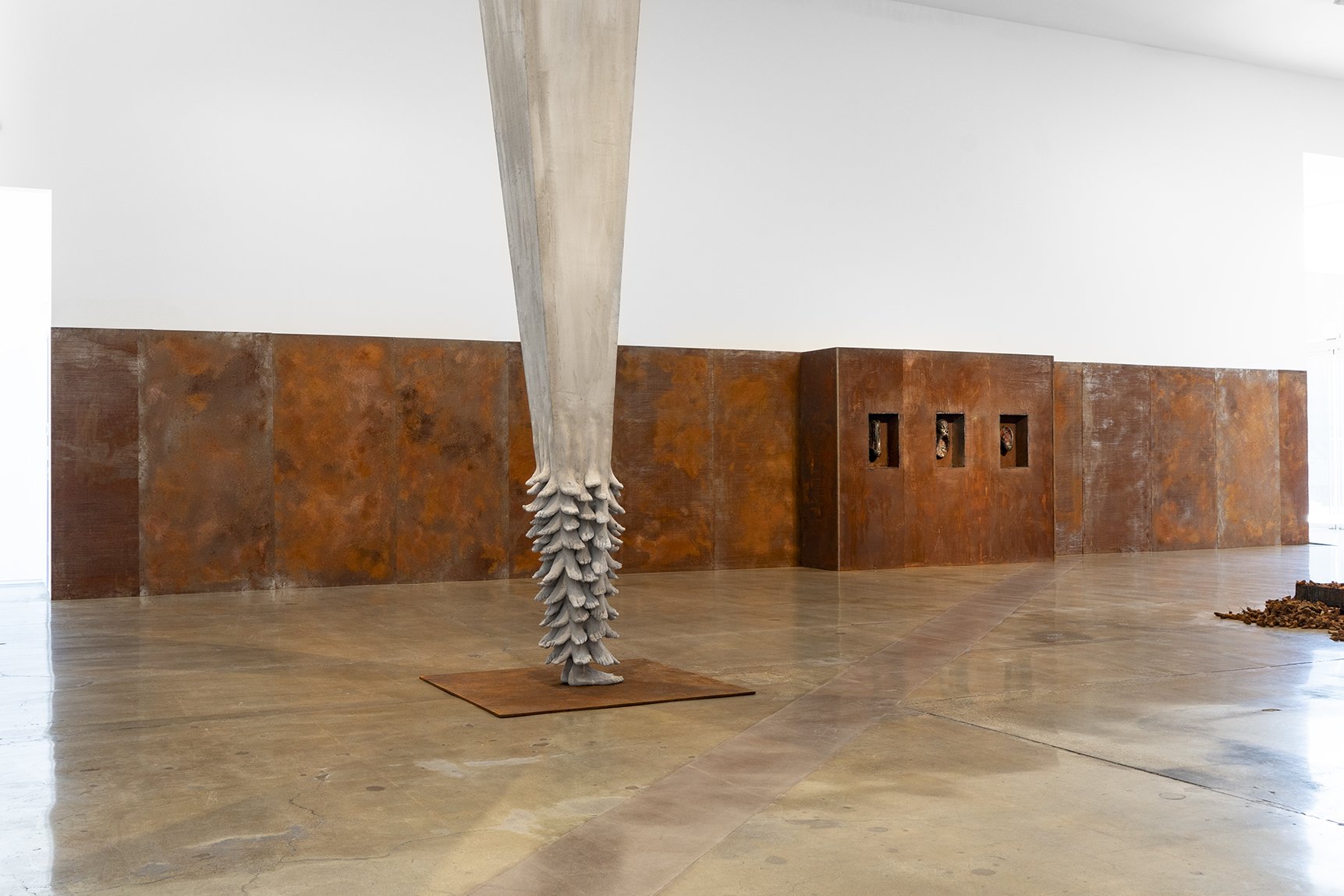
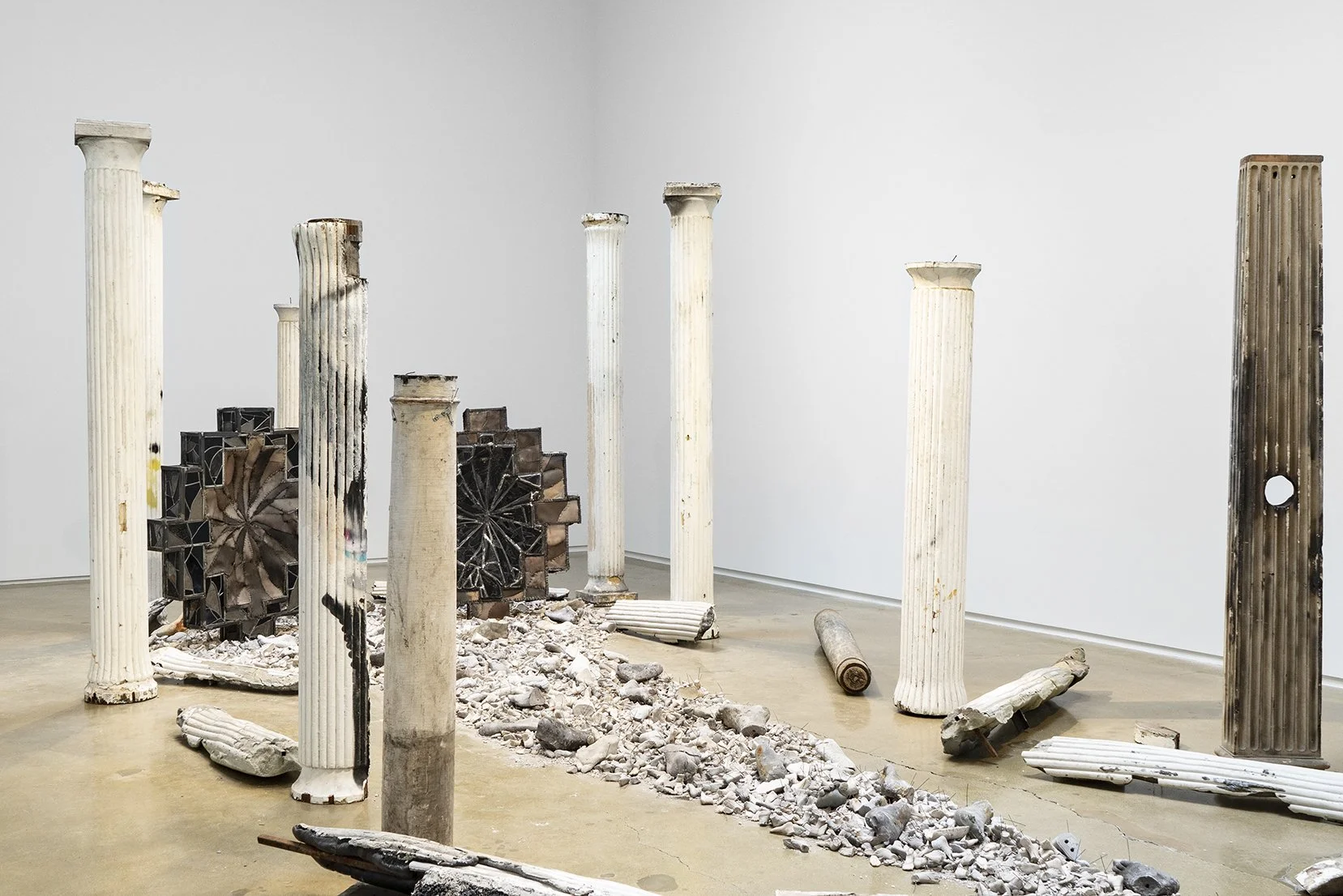
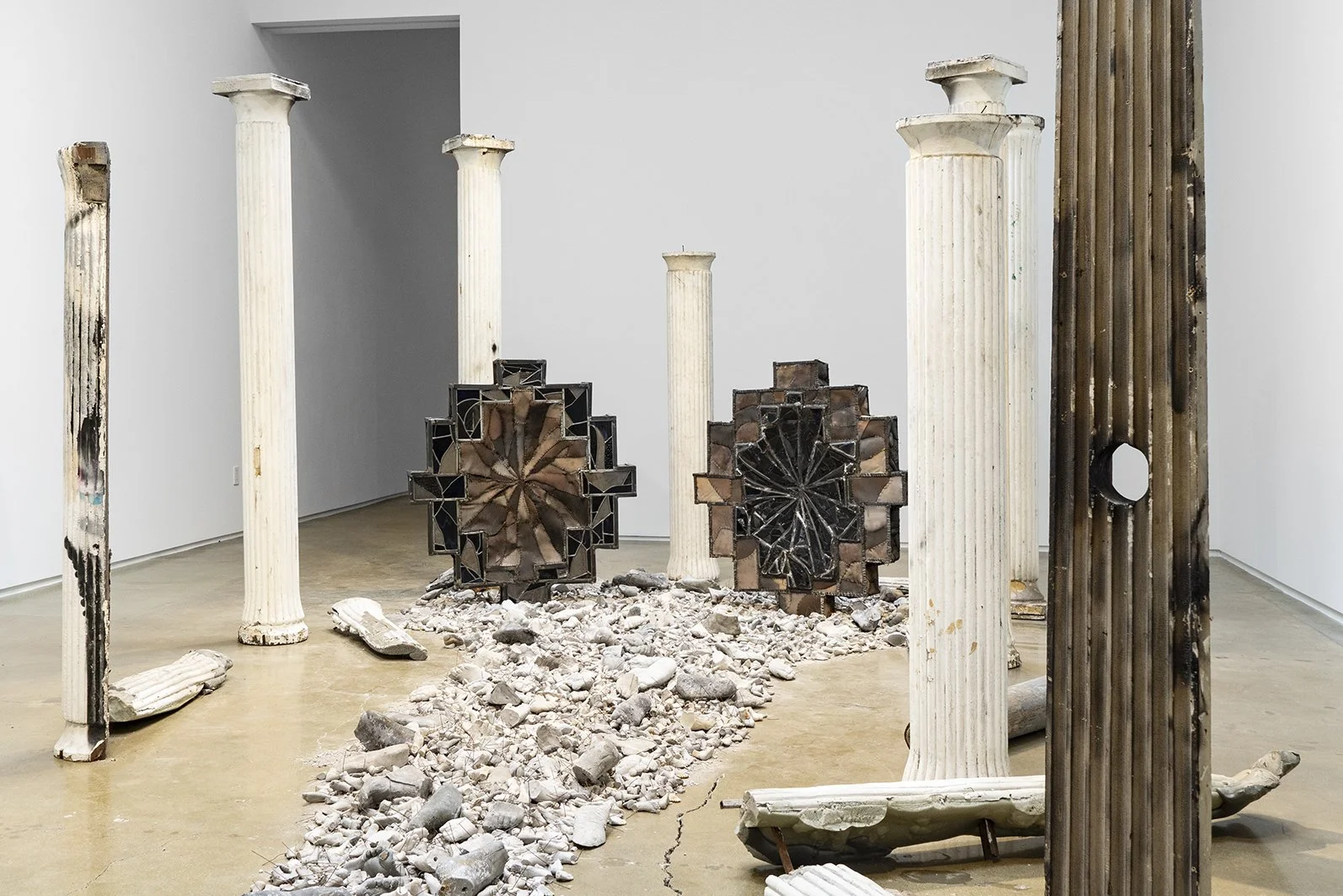
At the core of the exhibition are two monumental concrete obelisks inverted to place the stability of the structures onto a spillage of life-casted cascading feet, replicated and amalgamated together to behave as a dense, impenetrable element. Casted by Thomas himself, the anonymous appendages act as signifiers for overall forms, and memorialize the labor of precursors and histories unknown. In this approach to stabilization, Thomas addresses the precarious nature of humanity, while also representing ancestral strength, legacy and endurance of life among marginalized groups by referencing existing contemporaries.

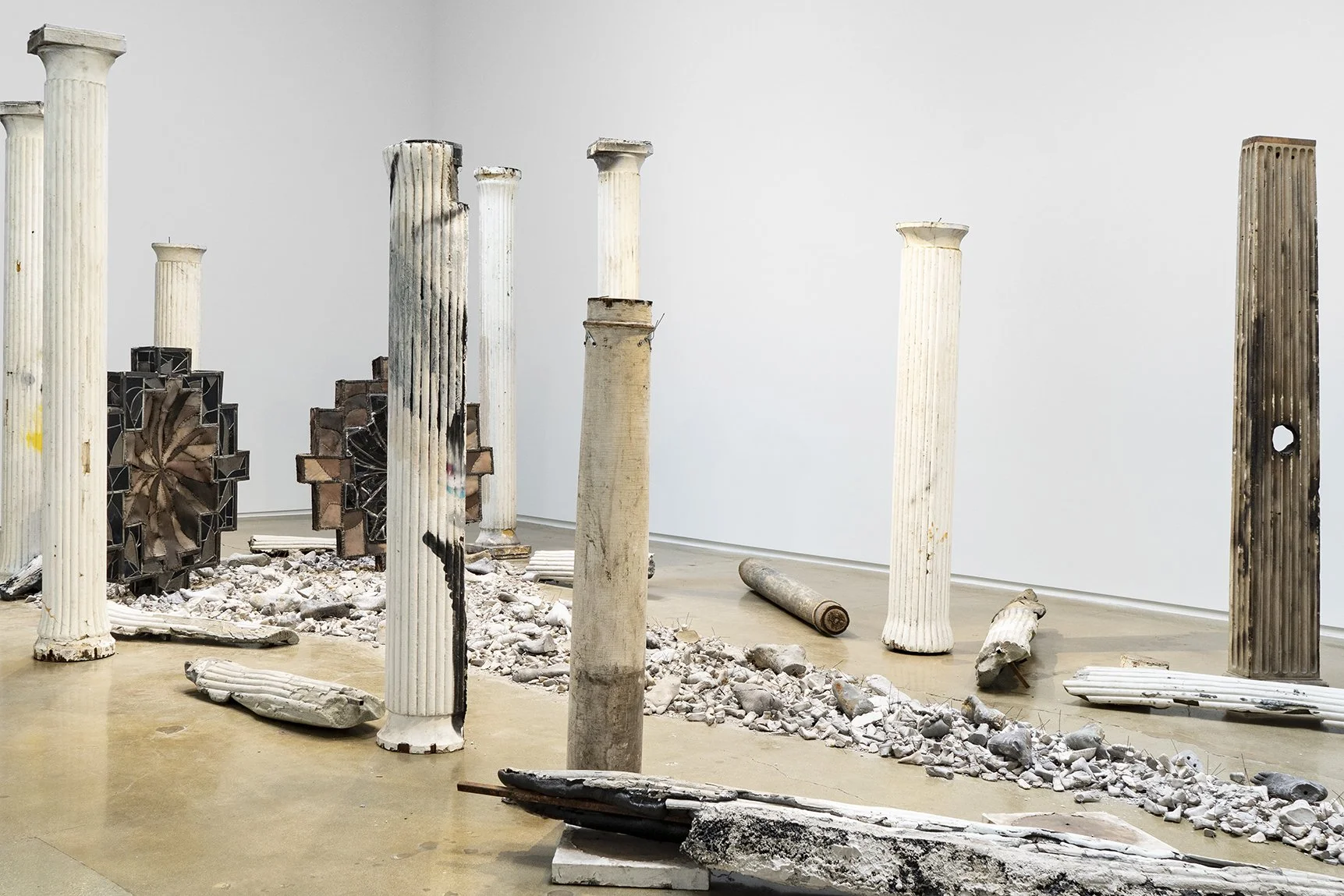
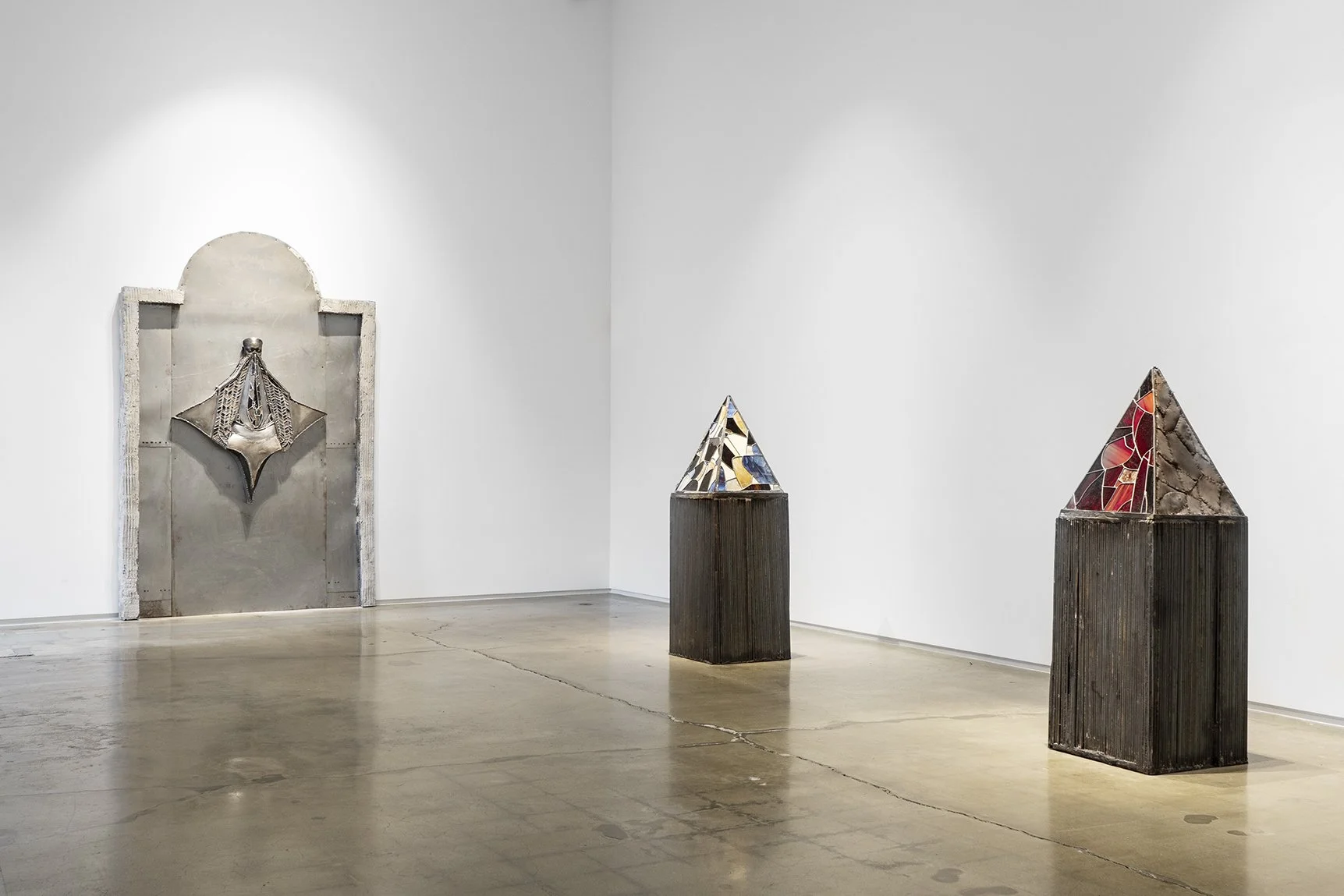
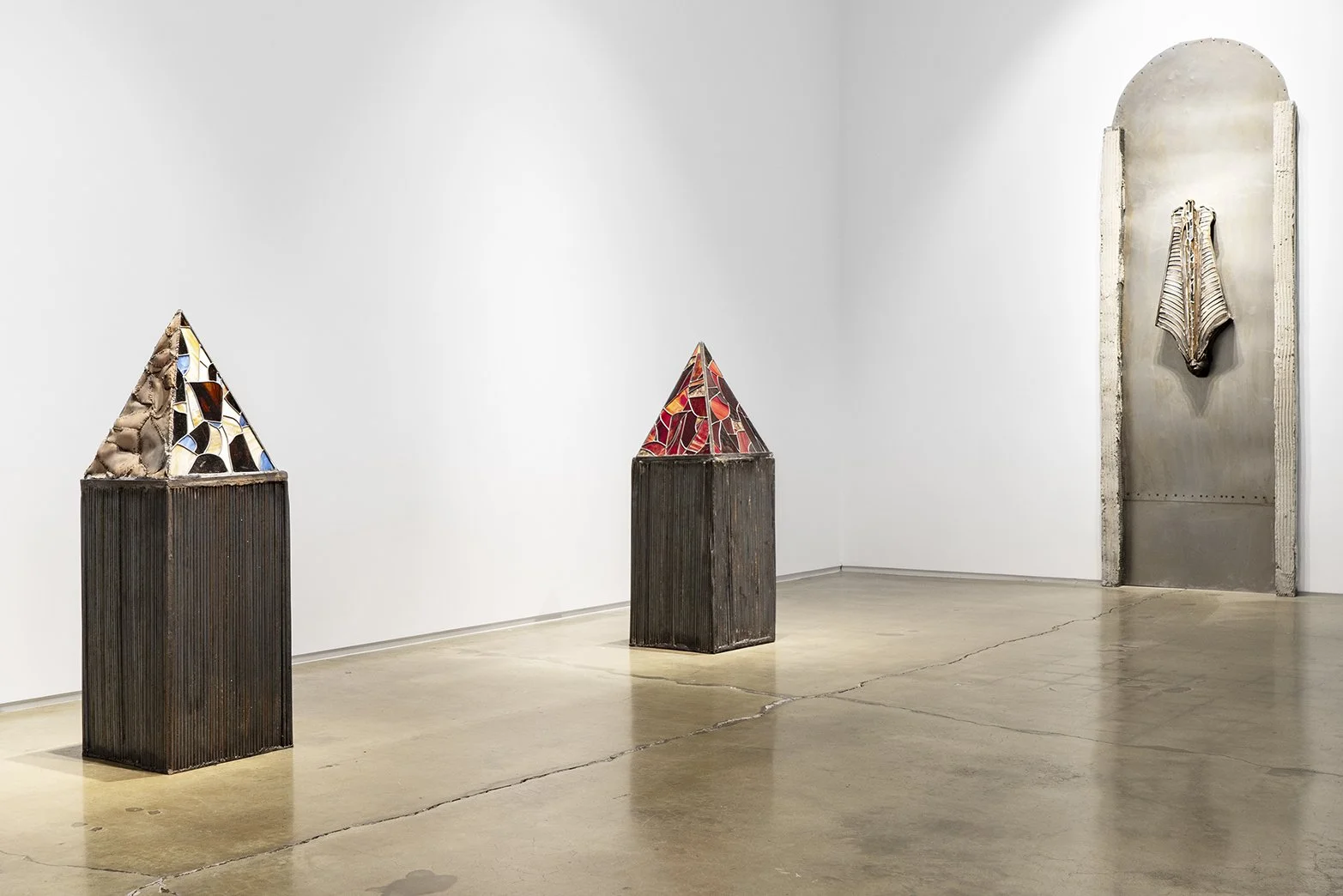
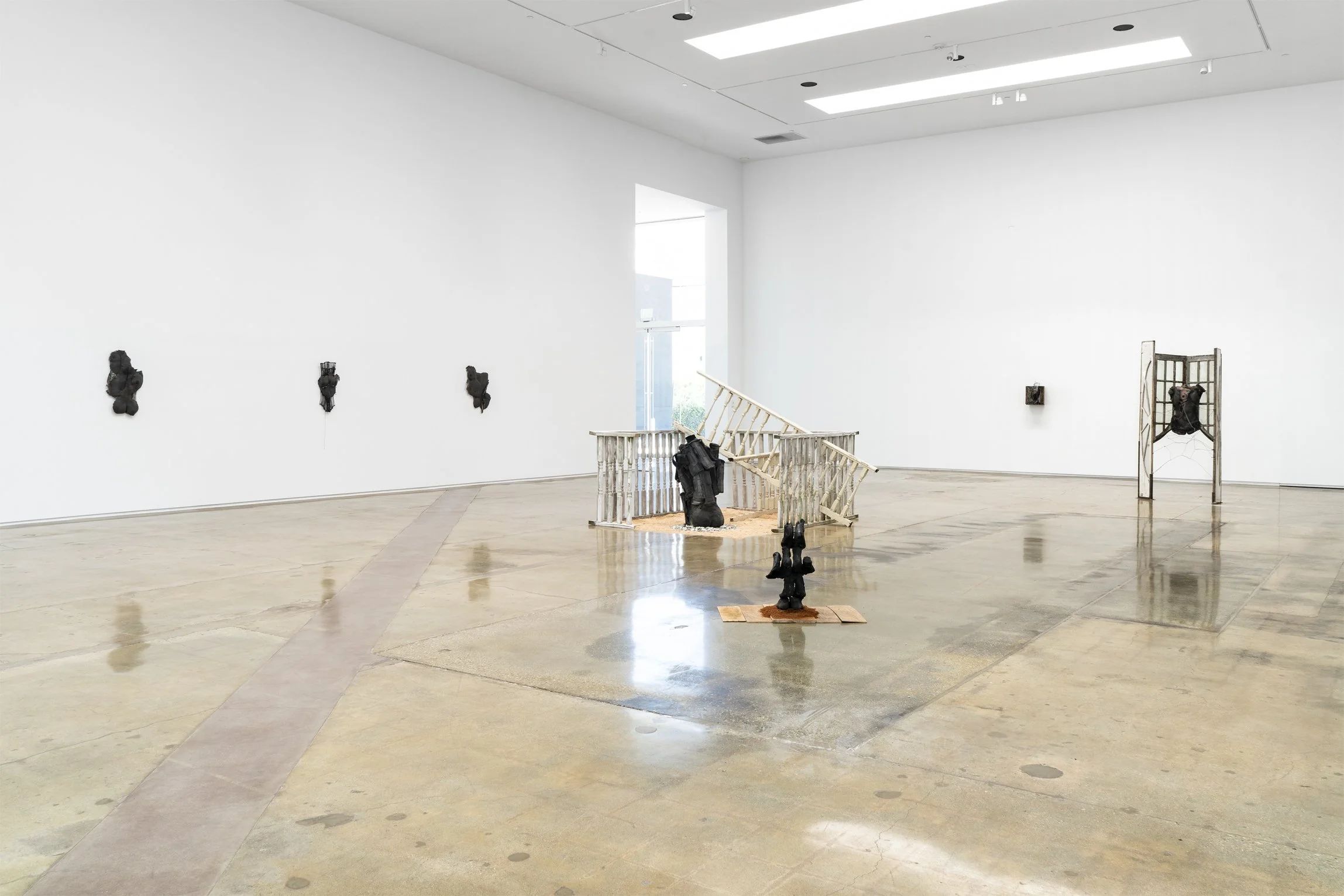
Other works in the exhibition expand on Thomas’ pursuit of representing “impossible bodies.” Influenced by the evolution of biomimicry, he constructs free-standing pyramids from anatomical forms that render as ancient structures. The biomorphic sculptures tether stained glass with sutured skin; a post-human symbiosis of the organic and inorganic that recall Thomas’ fascination with ecclesiastical imagery. Citing Martin Puryear’s bulbous forms and Louise Bourgeois’ merging of homes with human forms, Thomas states: “I want skin to perform as architecture, and architecture to perform something bodily.”

Chiffon Thomas’ explorative practice encompasses embroidery, collage, sculpture, drawing, performance, and installation. Amy Smith-Stewart, Curator at the Aldrich Contemporary Art Museum, elaborates on Thomas’ interdisciplinary approach to his work in a recent publication: “…interrogating a legacy of colonization, Black injustice, and classism in the US, Thomas entwines matters resonant with personal and collective histories of trauma and repair, as well as resilience and transformation.” In his 2021 exhibition with the gallery, Antithesis, Thomas used figurative assemblages to interpret feelings of nostalgia, metamorphosis, and decay; this new body of work is not so much a departure, but rather an enunciation of the artist’s practice as a sculptor.

Since opening his first show with Michael Kohn Gallery three years ago, Thomas has been featured in a solo exhibition at The Aldrich Contemporary Art Museum and the Hammer Biennial Made in L.A. 2023: Acts of Living. In 2022, he was awarded the Joan Mitchell Fellowship. Thomas’ work is in the permanent collections of the San Francisco Museum of Modern Art, CA; Hammer Museum, Los Angeles, CA; Museum of Contemporary Art, Chicago, IL; Studio Museum in Harlem, New York, NY; Institute of Contemporary Art, Miami, FL; and Crocker Art Museum, Sacramento, CA; among others.
Artist Page

Chiffon Thomas, Antithesis

Kohn Gallery is pleased to announce Antithesis, its first solo exhibition with New Haven-based artist Chiffon Thomas. Thomas’ practice is an interdisciplinary one, ranging across hand embroidered mixed media painting, collage, drawing, and sculpture. Identifying as a non-binary queer person of color, Thomas’ powerful figurative assemblages examine the difficulties faced by defining one’s identity in contemporary society. Through contorted figures and fractured compositions that float seamlessly between historical and contemporary styles and references, Thomas presents a process of becoming: a transition from dysmorphia to metamorphosis. Thomas states, ”through fracturing faces, I try to represent how individuals compartmentalize trauma and sometimes create multiple identities in order to heal. Sometimes this is how dissociative identity disorders develop. It’s also emblematic for when people of color have to color-switch. You often have to split into multiple identities and veil who you most comfortably are.”

Reminiscent of the diverse, mixed media practices exhibited by Robert Rauschenberg, David Hammons, Louise Bourgeois, and Louise Nevelson, Thomas’ own application of materiality becomes a language for translating cultural references and personal experiences. Raised with a strong religious upbringing, Thomas’ work often grapples with conflicting beliefs, values, and desires, primarily using tactile methods of sculpture as an expressive, visual language that interprets personal feelings of nostalgia, longing to belong, and affirmations of self-identity. Past photographs and images of the self are deconstructed into sketches and then built back up with rebar wire, plastic urethane, nails, screws, and thread. Thomas states, “I introduce material to elaborate meaning; a solid material or dense material signifies something that cannot be penetrated and is indestructible. I might use bibles, or religious doctrines that are very rigid, to create a body and let that be a visual language.” Figures appear to shift in and out of focus, resulting in visceral collisions of abstraction and clarity that invite viewers to decode the fraught relations between memory and reality, visibility and understanding.

For their solo show, Antithesis, Thomas denotes how opposing objects or bodies can exist within a single environment or space, creating a utopia of their own design. The artist bonds binary qualities together, crafting fluid subjects who evade simple categories… modeling the autonomy they seek. Thomas’ usage of multimedia allows them to examine issues of race, gender, and sexuality. In particular, photography and stitching are combined as a way to preserve and repair history. In Thomas’ work, the loose threads allow for a meaning of one’s own interpretation, while the usage of different mediums paints a picture of a loaded and rich past. Utilitarian materials such as rebar ties found in concrete to hold skyscrapers together are re-purposed to construct the frame of Thomas’ bodies, but only the outline is present. Thomas states, “So similarly to a skyscraper, in my art, they can be used to keep a person together as much as possible in a society that oppresses some individuals at a disproportionate rate.”

As an amalgamation of ideas about capitalism in relation to Christianity, Antithesis provides an indication of how social constructs are being corrupted. Inspired by Colonial design, Thomas uses deconstructed materials from a New England demolition site to build an array of sculptures ranging in size along with a selection of works on paper. The silicone bodies in these sculptures wear the parts of building materials - deconstructed and reconstructed several times from cement, foam, rigid plastic and more. Thomas builds housing units for the sculptural body using readymade materials, finding interior parts to repurpose that add an interpretation of function. Thomas states, “I destroy and then I reconfigure”.

Artist Page