Bruce Conner, INKBLOT AND FELT TIP PEN DRAWINGS

February 18 - April 25, 2026
Gallery 2 & 3

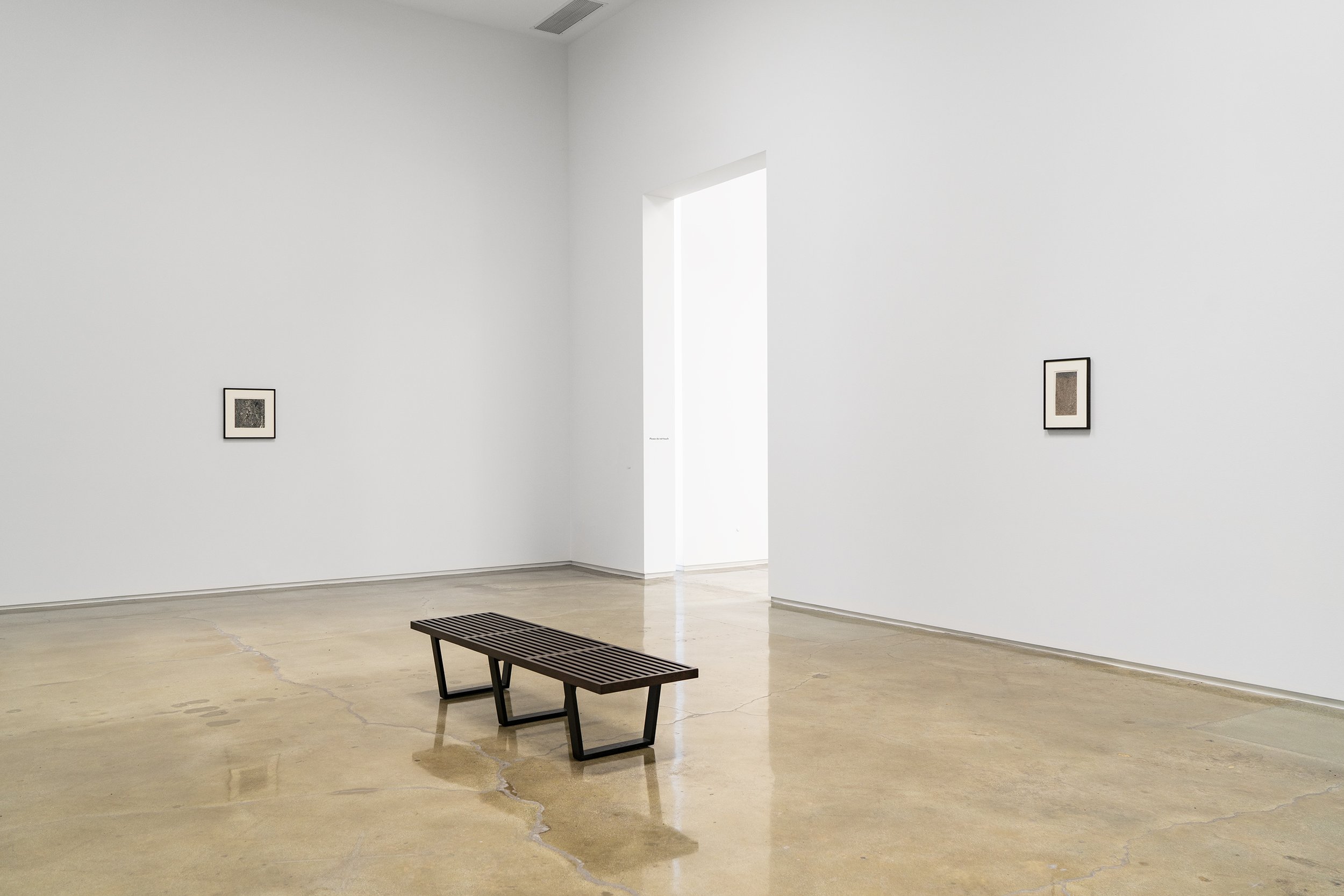
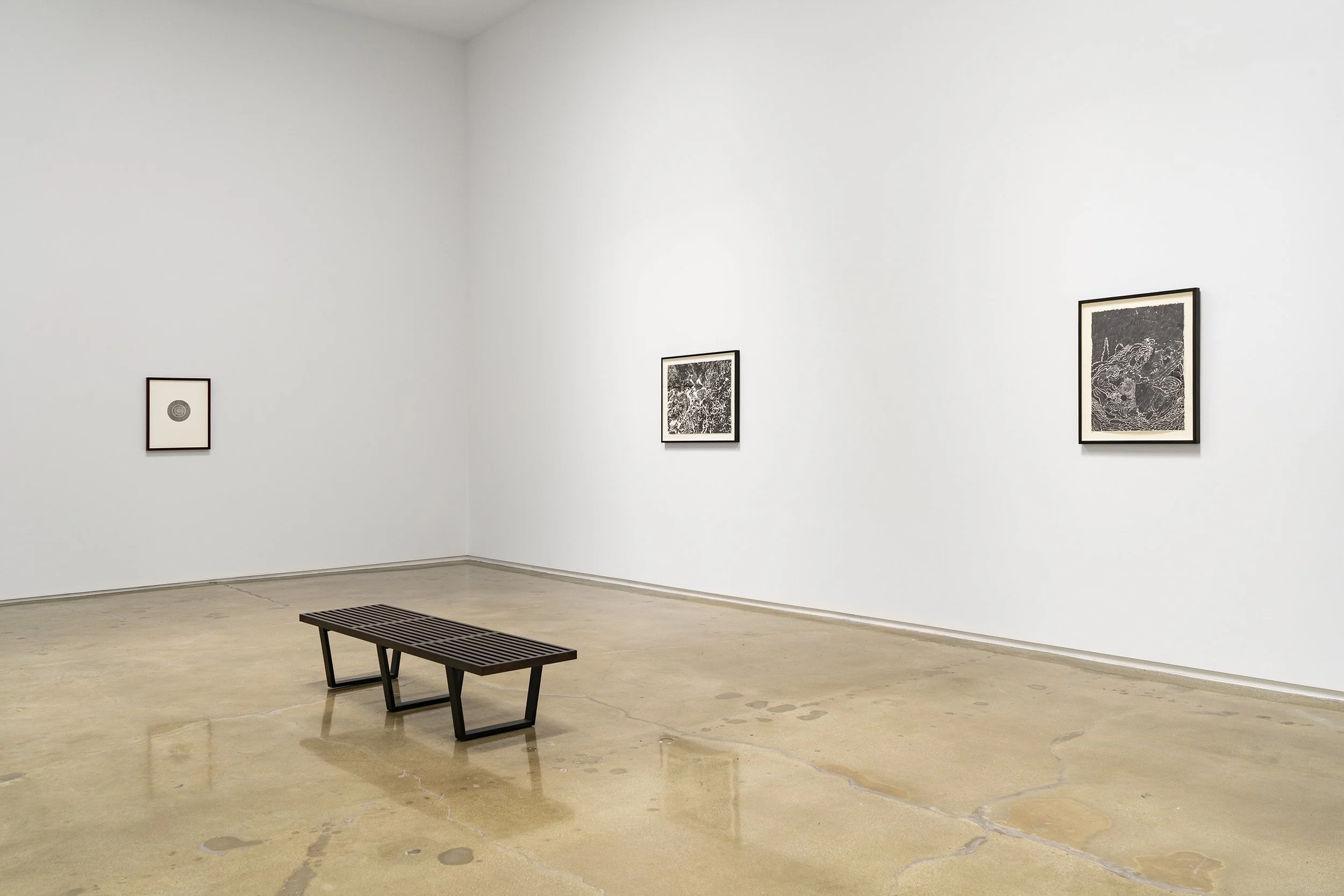
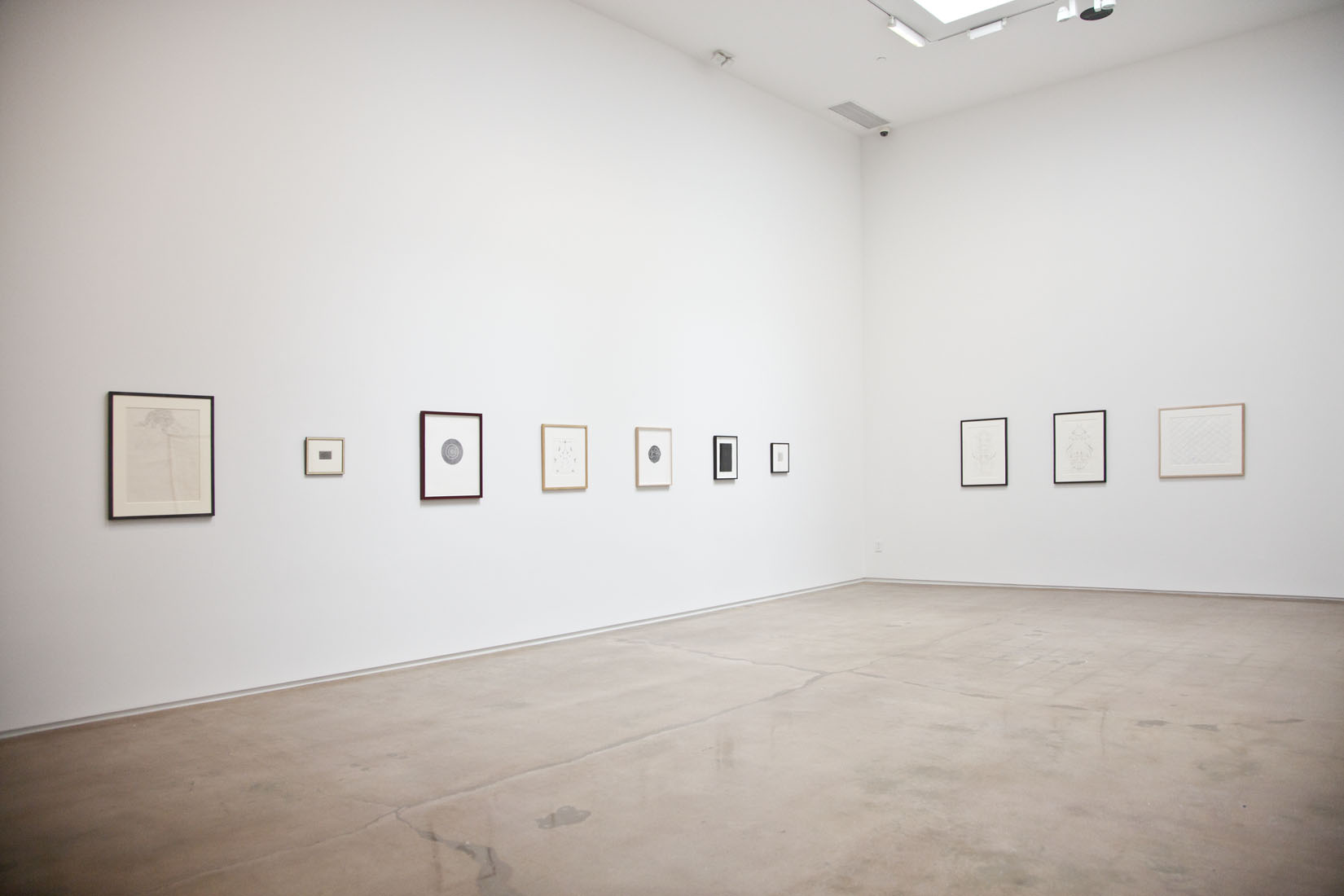
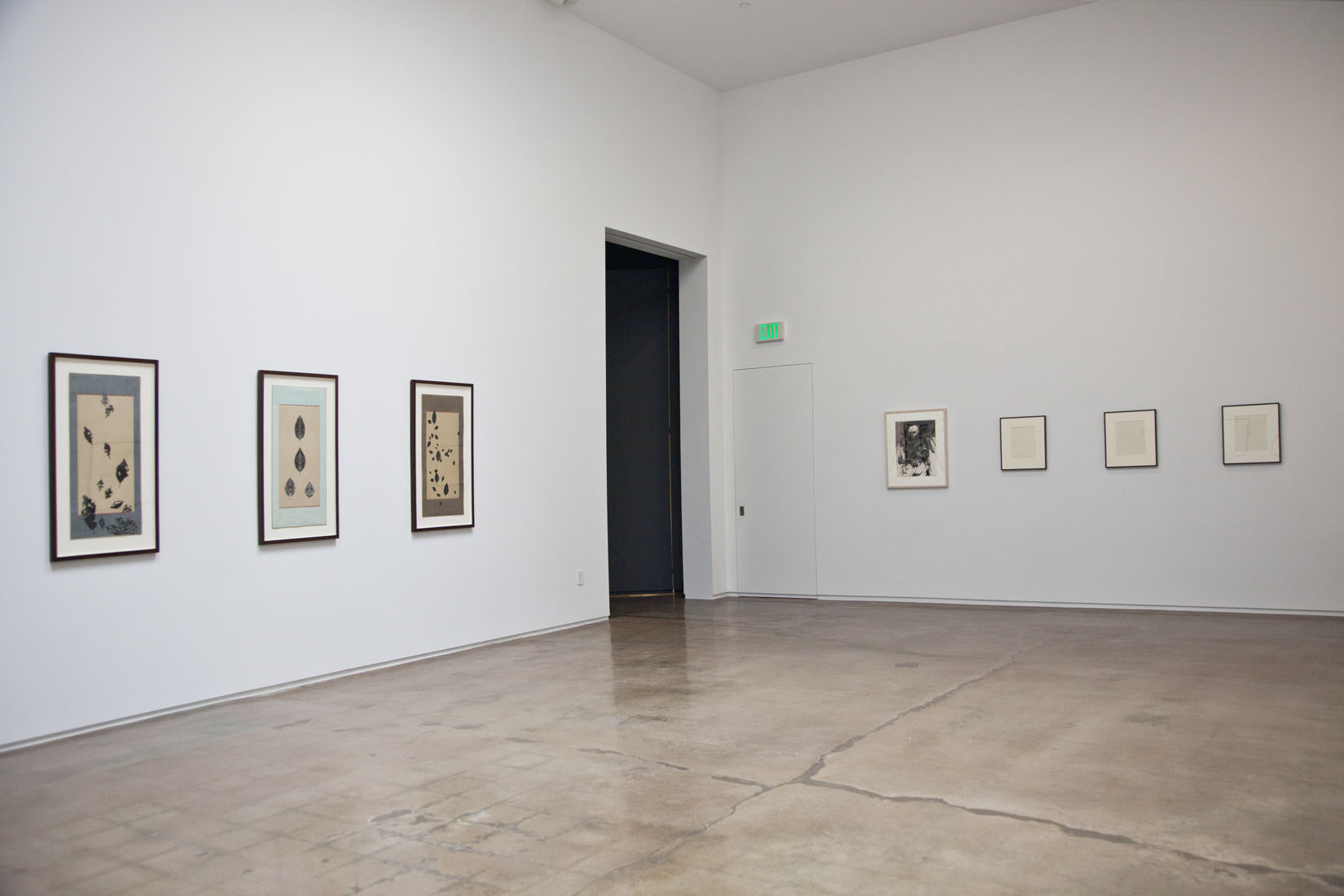
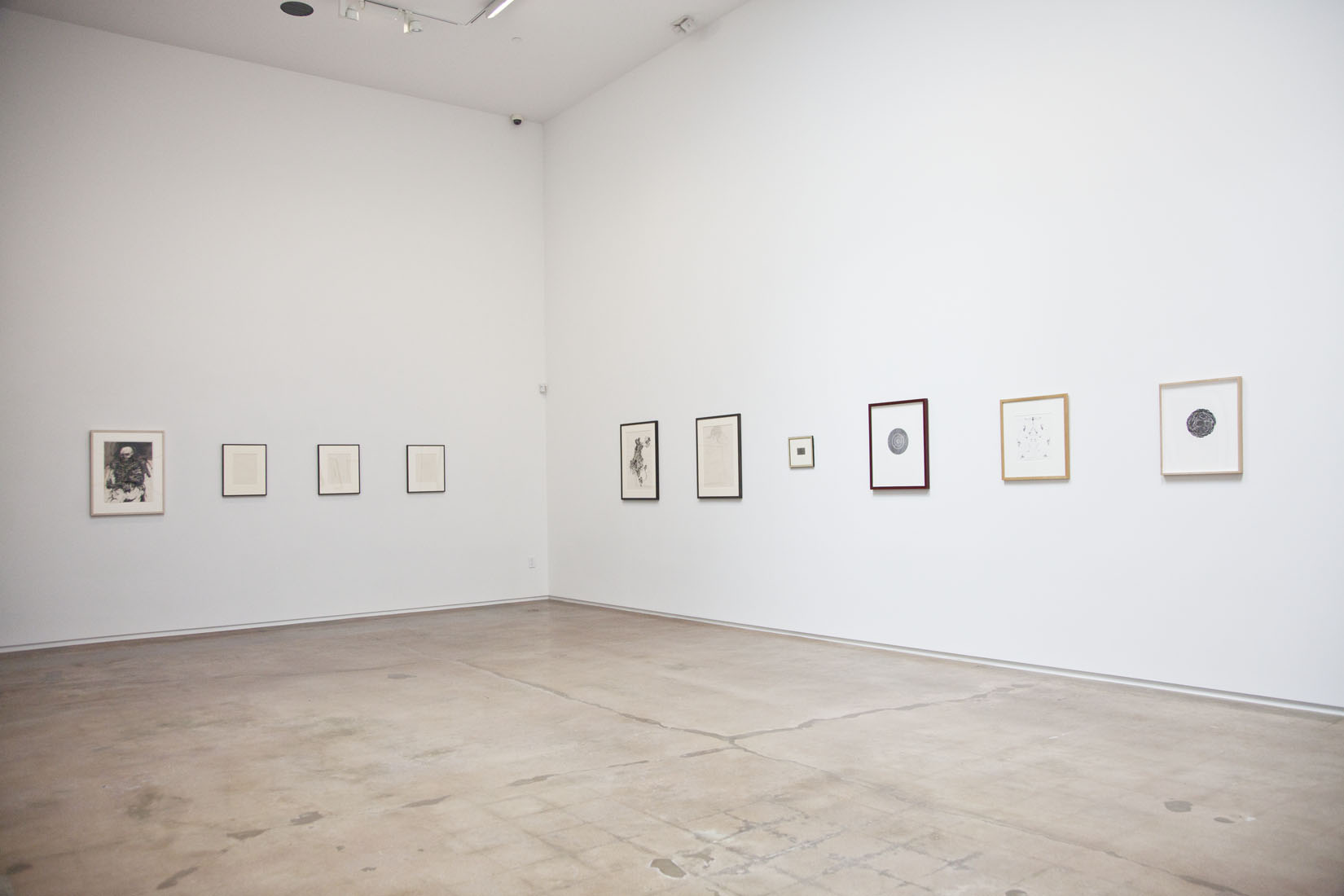
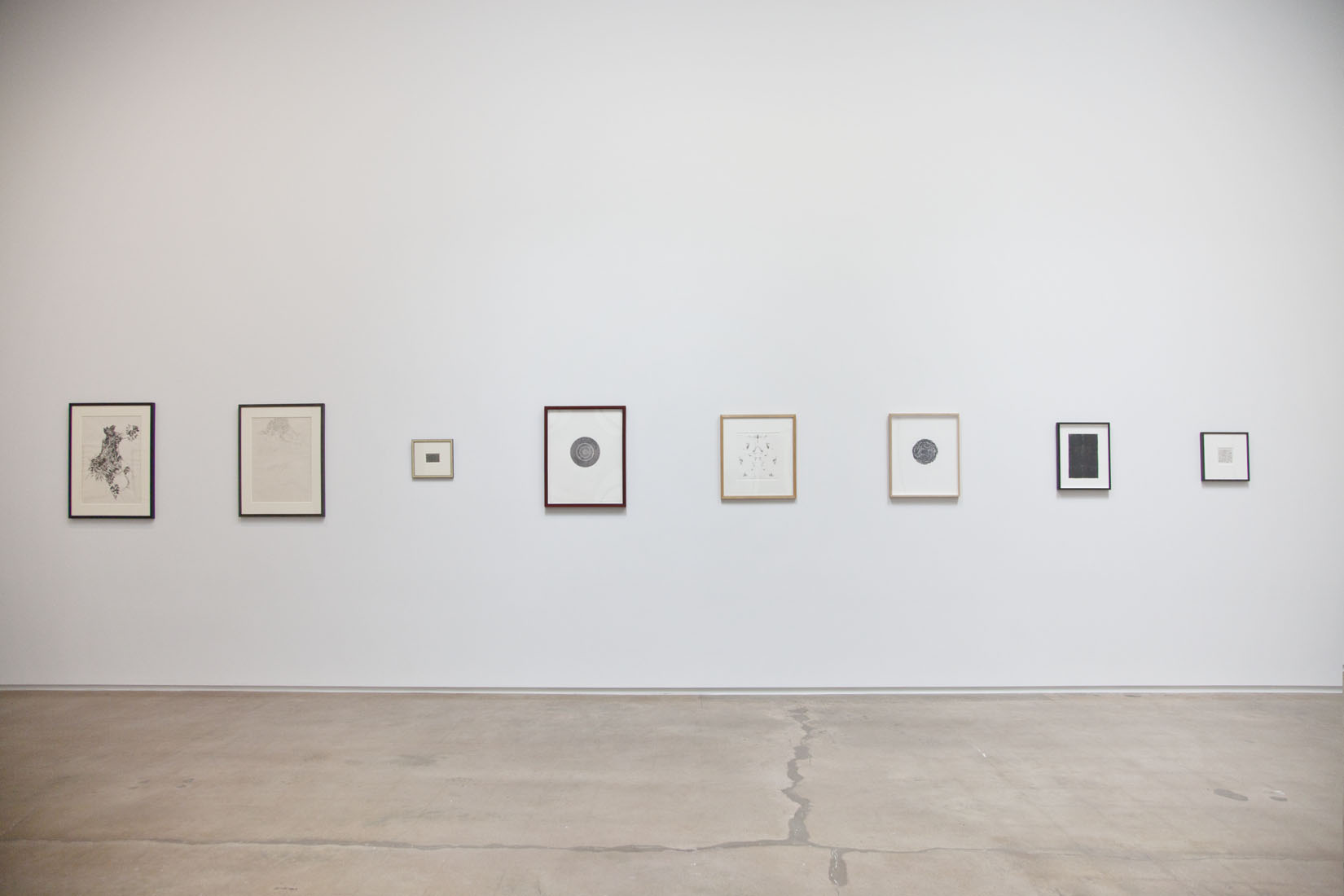
Michael Kohn Gallery is pleased to present a concentrated selection of inkblot and felt-tip drawings by Bruce Conner. Created between the early 1960s through the 2000s, the collection of drawings examines a pivotal yet comparatively underrecognized aspect of Conner’s multimedia practice. The exhibition opens February 18, 2026, and will be on view concurrently with It Don’t Mean a Thing (If It Ain’t Got That Swing): 100 Years of Wallace Berman.

While Bruce Conner (1933–2008) is widely celebrated for his contributions to assemblage, experimental film, and performance, drawing remained a critical and continuous site of investigation throughout his career. The meticulous inkblots presented in this exhibition—produced through folding and mirroring techniques—are an articulation of natural symmetry, insects, bird and fish shapes into what Conner described as a “linear freedom of movement.”

Presented alongside the airy, aqueous, and elemental inkblot drawings are early works on paper such as NEON NIGHT WITCHITA, KANSAS, 1963, which display fields of cross-hatching free from the constraints of formal tightening and reduction. Conner’s nuanced and repetitive lines draw space into and out of the second dimension and reflect a deep interest in automatism and the generative potential of material process. Informed by Surrealist strategies and the visual language of Rorschach tests, these works activate a space in which authorship is partially relinquished, and meaning remains perpetually unstable.

Markedly resonant with other  20th-century Post-War contemporaries like Brice Marden, Willem de Kooning and Lee Krasner, Conner’s works on paper constitute a uniquely striking gestural style. His high-quality corpus of work is held in major museum collections worldwide, including The Centre Pompidou, Paris; The Museum of Modern Art, New York; the Whitney Museum of American Art; San Francisco Museum of Art; and Los Angeles County Museum of Art. 

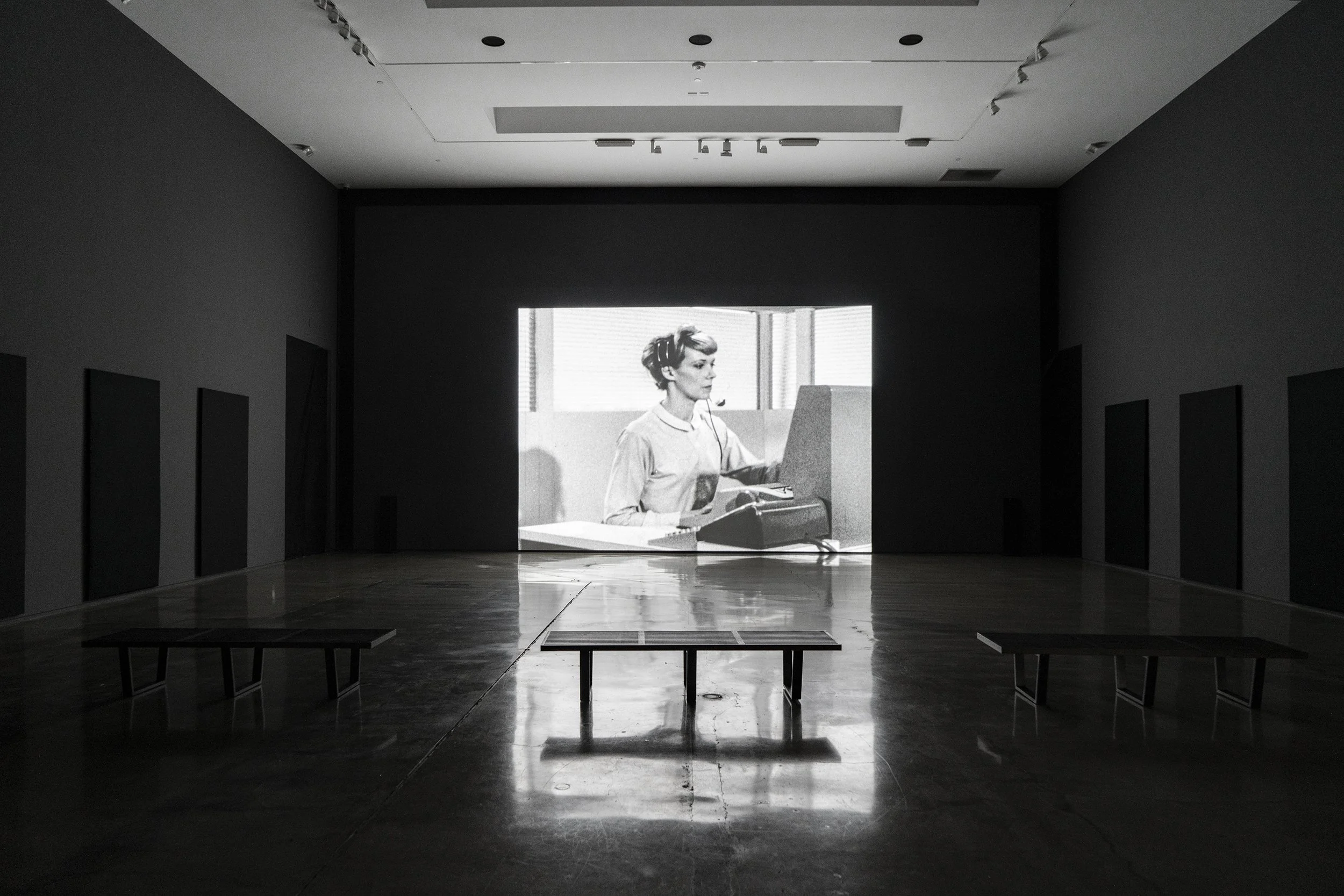
Michael Kohn Gallery’s presentation will coincide with the Marciano Art Foundation’s presentation of seven iconic experimental films by Conner. Titled BRUCE CONNER/ RECORDING ANGEL, the exhibition offers a rare opportunity to consider the reciprocal relationship between his graphic and cinematic practices across Los Angeles. In dialogue, the respective presentations illuminate Conner’s ability to move fluidly between mediums while maintaining a conceptual framework rooted in fragmentation, rhythm, and temporal disjunction.

Artist Page

REPORT: A FILM BY BRUCE CONNER

April 20 - June 18, 2022
Gallery 1

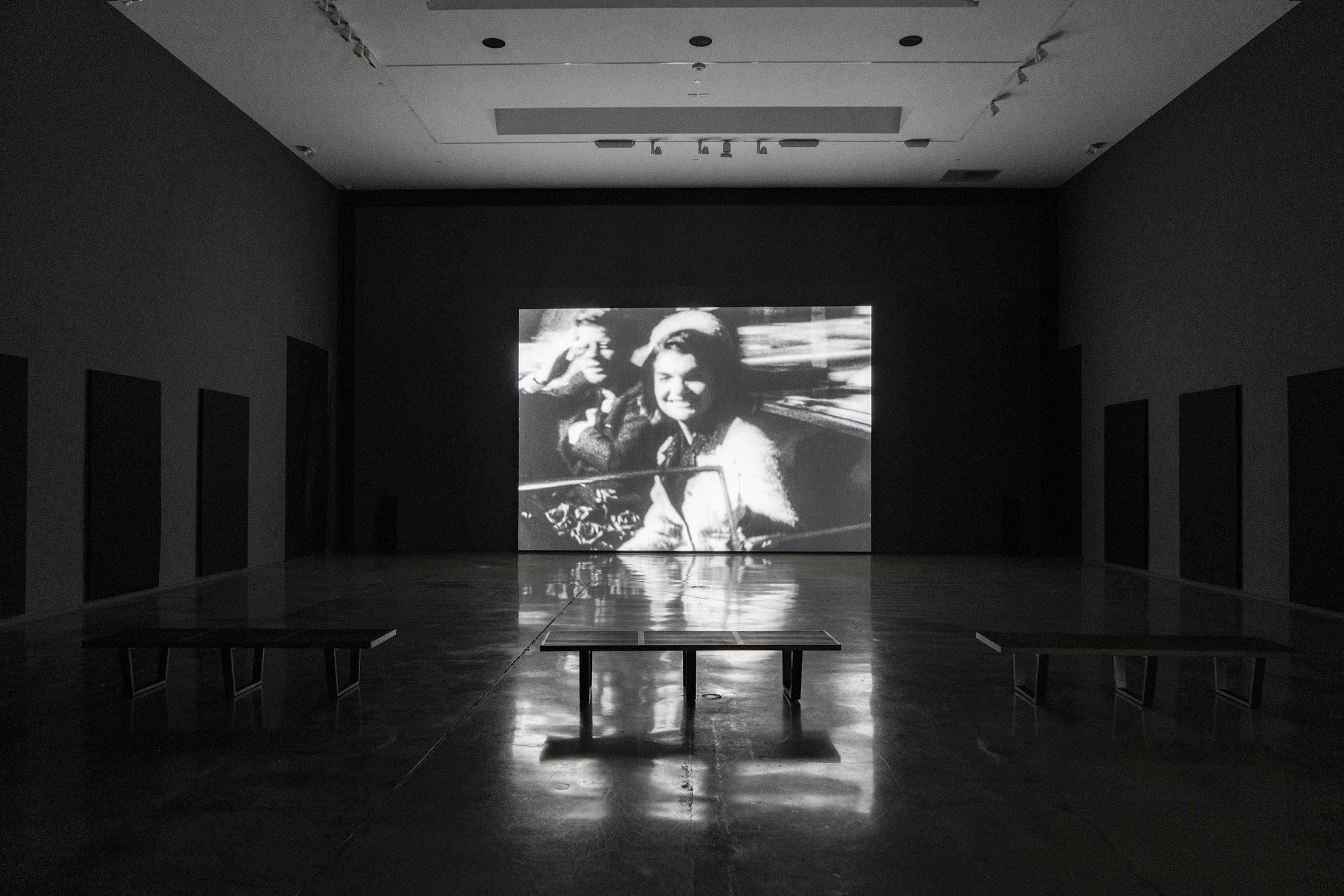
“Here was a death assumed to be closely documented and clearly communicated. There couldn’t have been more cameramen, reporters, witnesses, and yet all of it is fragmented into thousands of points of view.”      – Bruce Conner

In the nearly 60 years since the broadcasted assassination of President John F. Kennedy, Kohn Gallery presents REPORT (1963-67) by the late Bruce Conner (1933-2008). A fundamental work in the trajectory of 1960s avant-garde film, REPORT underscores an analysis of the ineffectuality of media, further channeling a distinct parallel to present-day media consumption. In the film, Conner documents the zeitgeist of the Kennedy era and reconstructs his tragic death utilizing fragmented newsreel footage and live radio transmissions in combination with manipulated film leader. His masterful assemblage of visceral and auditory elements, not only contemplate the event but act as a vehicle for critique of the media’s complicity in the posthumous consumerism that followed. 

The film, which took two and a half years to complete, is the eighth and final version that Conner released in 1967. Conceived as a personal medium for grief, Conner’s multiple reworkings represent his metamorphic process in which thefilm transforms from a proximate and personal response, to a mournful iteration co-opted by society and transformed by media’s presence. 

Conner responds to the scarcity of public information by composing available broadcasted imagery to conjure a retelling of the events that transpired. In the two-part film–“the death of Kennedy” and “epilogue”–Conner imagines an illusory montage sequence that transports viewers into a volatile ether of repetition, inversion and distortion juxtaposed with sonic flashbacks.

As Bruce Jenkins wrote, “The epilogue of REPORT is one of the most innovative and sustained experiments in Eisensteinian vertical montage in the history of the medium. It is as well as an astounding exposé of the media’s mode of creating meaning, of constructing messages, and ultimately controlling information.”

Conner’s narrative devices in REPORT bring into frame an experimental mise-en-scène that, through its subliminal implications, comments on the power of media communications. REPORT marks a moment in which the character of media shifts: the emergence of the mass audience–one engaged in a passive and consumerist position that further brings into question the condition of contemporary media.

Artist Page

Bruce Conner, LOOKING FOR MUSHROOMS

February 9 - March 15, 2017
Gallery 1

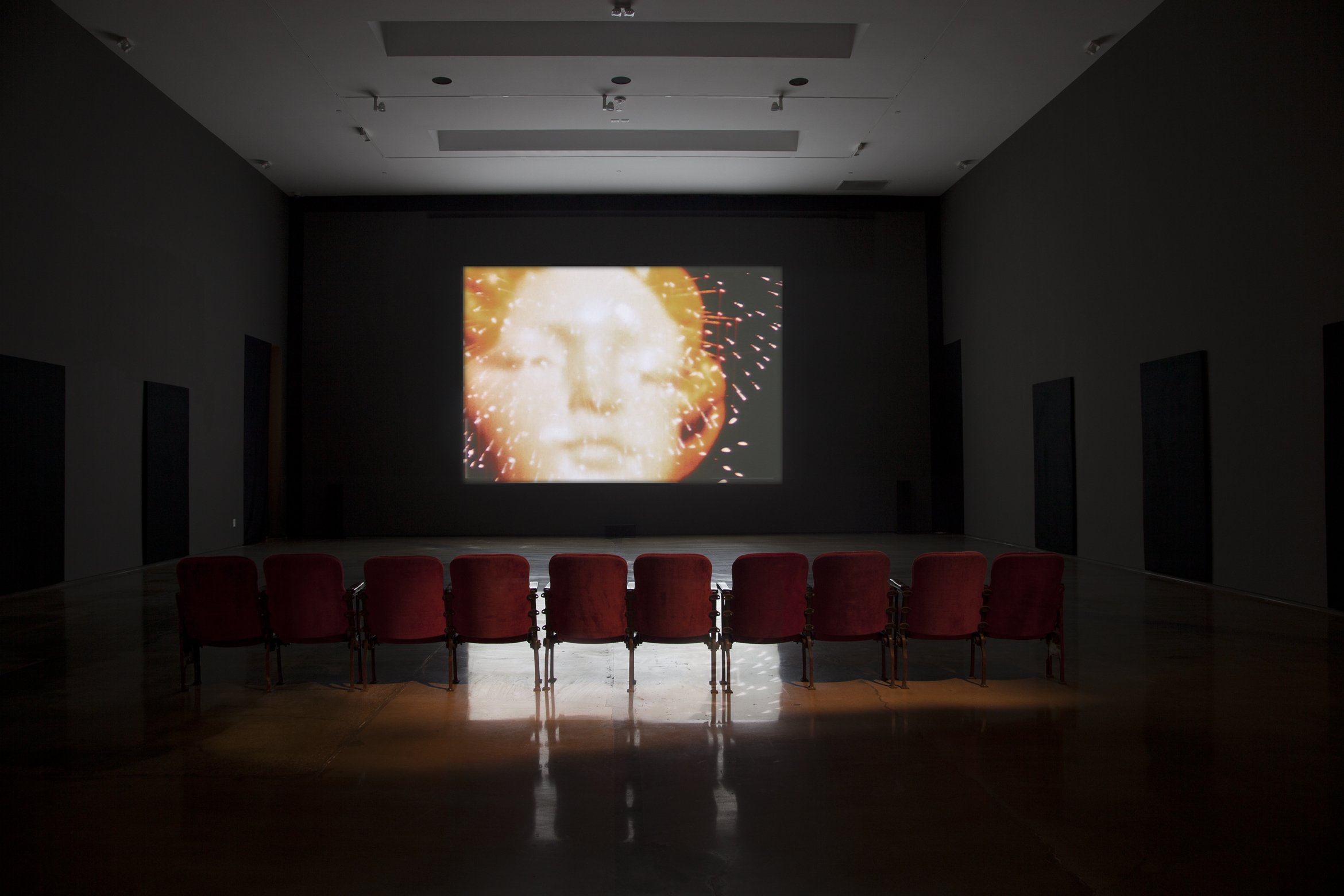
Composed primarily of footage shot by Bruce Conner in San Francisco in the late 1950s, and footage filmed in rural Mexico while he and his wife, Jean Conner, were living in Mexico City in 1961-62, LOOKING FOR MUSHROOMS is an “editing tour de force” of brilliant colors and pulsing rhythm. Dennis Hopper credited Conner’s film with influencing his own work, “Easy Rider,” while film and art historians have pointed to Conner’s rapid-edit technique as masterful and groundbreaking.

The original 8mm silent loop version of the film was shown at The Rose Art Museum in 1965 at Conner’s first solo show. The film was shown many times without sound before it was edited from 600 feet of film to 100 feet in length in 1965. A 16mm version of the 100 ft. film was shown, in 1967, at sound speed (2 minutes, 43 seconds) with The Beatles recording of “Tomorrow Never Knows,” whose transcendental lyrics reflect the fast paced imagery of this hypnotic film. In 1996, Conner created the long version of LOOKING FOR MUSHROOMS by adding a soundtrack, “Poppy Nogood and the Phantom Band” by Terry Riley. Riley performed his music at an all night concert. The portion of the performance recorded by Riley on 1/4” audio reel in 1968 took place at about 3:00 AM.

New digital restorations of LOOKING FOR MUSHROOMS are part of a series of groundbreaking restorations that will ultimately preserve all of Conner’s films, in limited editions of the highest quality, for future generations.

Artist Page

Bruce Conner, A MOVIE

November 11, 2016 - February 8, 2017
Gallery 1

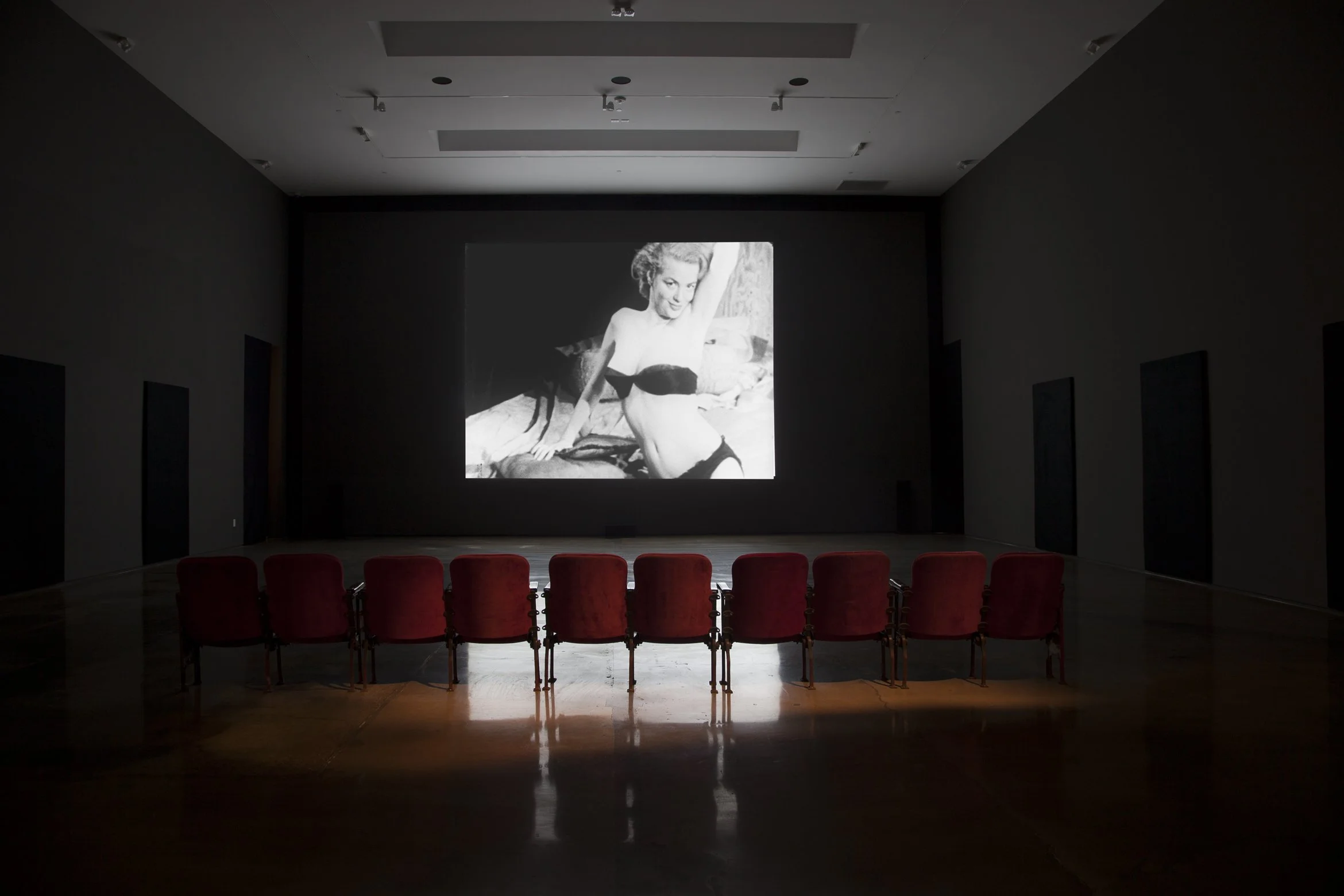
During SFMOMA and MoMA’s large survey retrospective honoring the late Bruce Conner (1933 - 2008), Kohn Gallery premieres Conner’s masterwork, the seminal A MOVIE (1958). Comprised of scavenged newsreels, B-movies, and coming attractions, A MOVIE has been described as the first contemporary “found footage film.”  The sophistication in which Conner has crafted the work – a precision that would define his entire oeuvre across diverse media – belies any association with the readymade.

A MOVIE orchestrates a virtual symphony of disasters, including car crashes, explosions, war, and famine, as well as moments of grace – a tightrope act, a plane floating through clouds, or light reflected on water.  The images in their specificity become archetype, and they attain a state of visual poetry that allows the viewer to feel their full emotional weight. 

With his initial exploration in the film medium, Conner launched a lifelong career positioning moving image alongside collage, assemblage sculpture, drawing, painting, and photography; in this first film he reconceived notions of cinema itself. A MOVIE is deeply invested in exploring the tactile nature of its medium, where Conner found the perfect vehicle to explore the depths of the human experience in modernity.

In A MOVIE’s joining of montage with Respighi’s “Pines of Rome,” Conner also established a filmic language of music and image that he would refine in his work over the course of several decades. In this stroke, Conner managed to not only re-introduce film to the art world (after a relative absence dating to the 1930’s), but invented the music video--an achievement later recognized by David Byrne and Brian Eno, who approached him to make films accompanying their classic “My Life in the Bush of Ghosts.”

The new 4K digital restoration of A MOVIE, conducted from Conner’s original 16mm positive A-roll, is the second in a series of groundbreaking digital restorations which will ultimately preserve all of his films in unique limited editions of the highest quality.  The first to receive this treatment, CROSSROADS (1976) was described in a feature-length essay in Artforum in 2013, and has been hailed as a new standard in the presentation and archiving of moving image.

Artist Page

Bruce Conner: CROSSROADS & Works on Paper

November 8 - December 20, 2014
Gallery 1 & 3

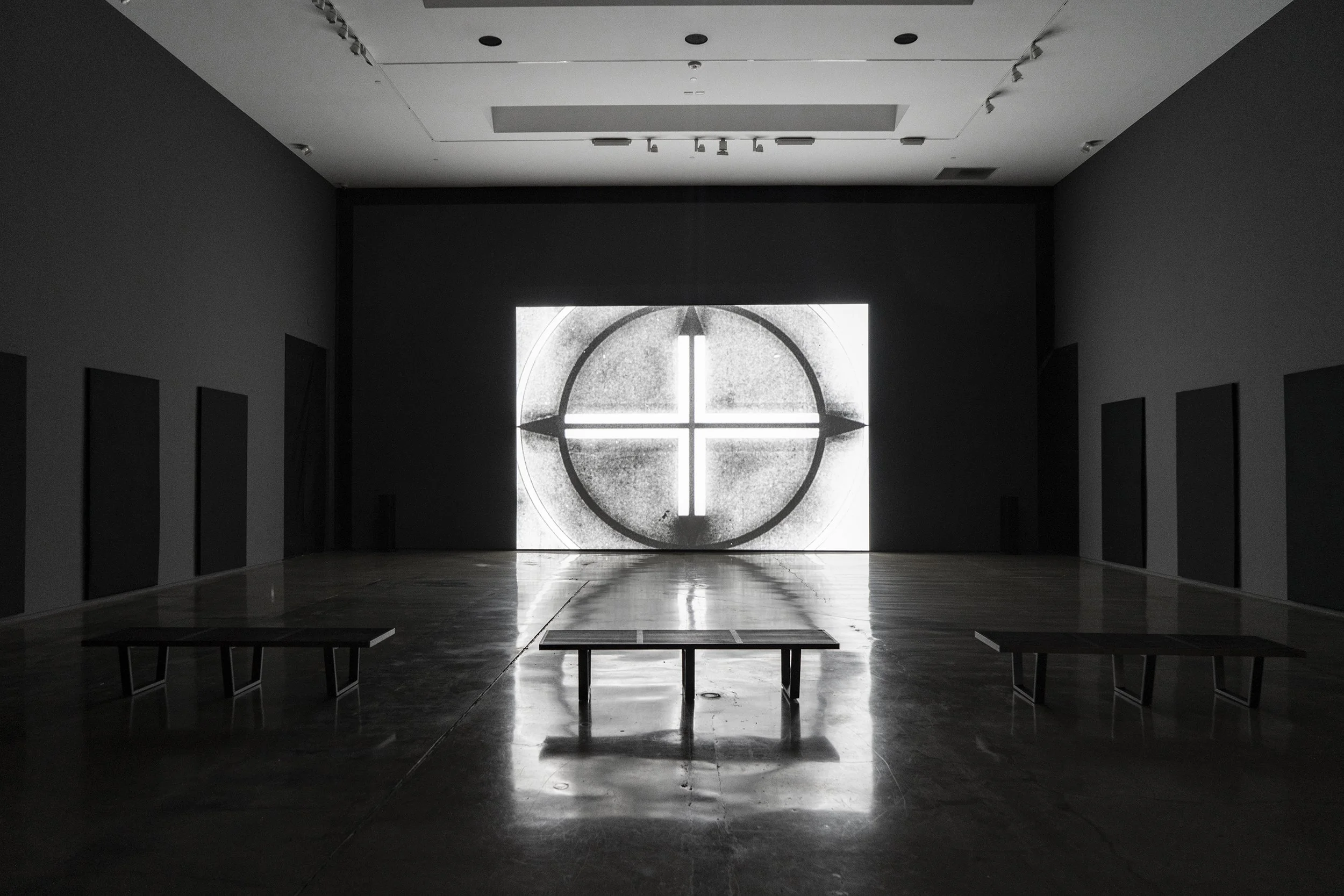
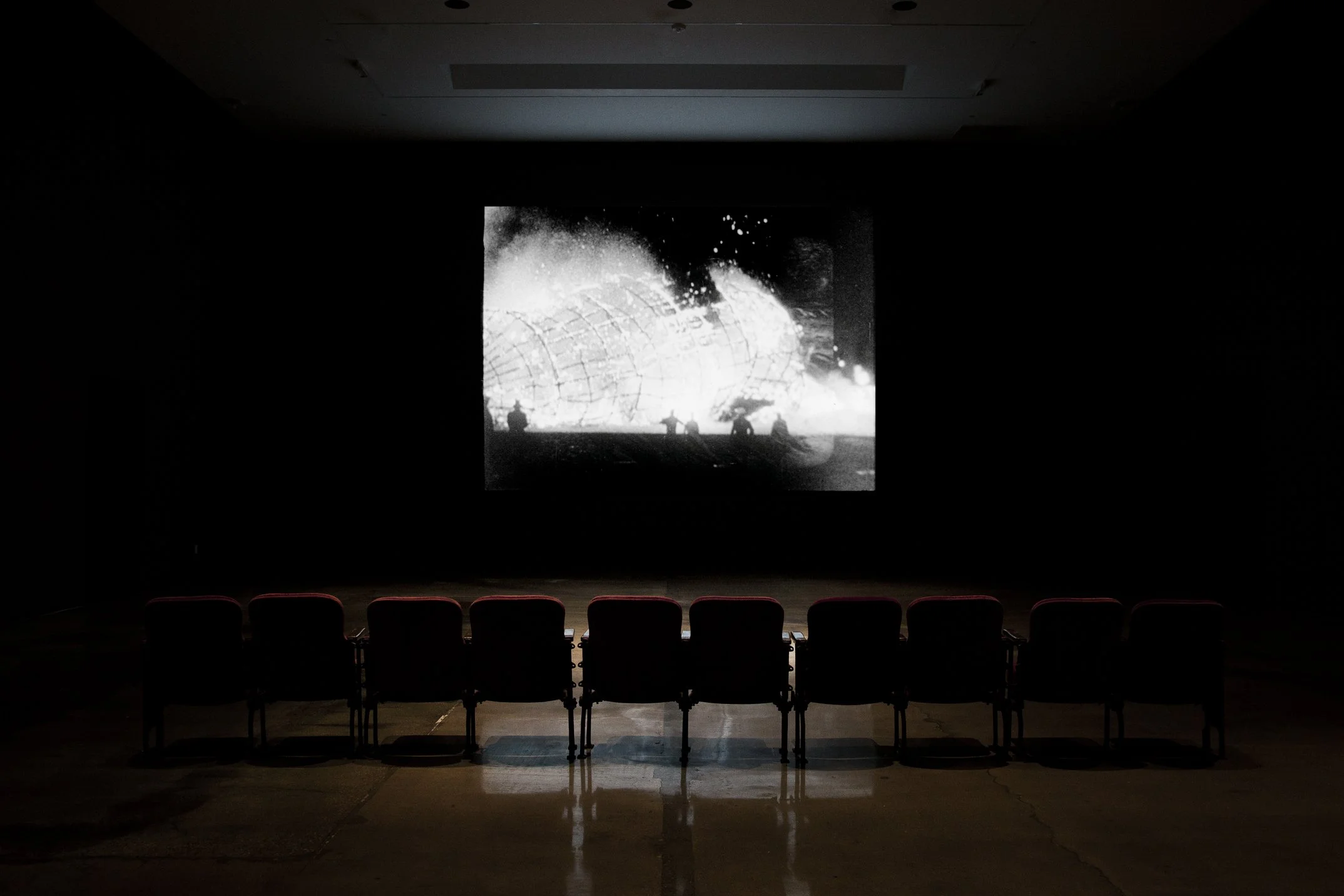
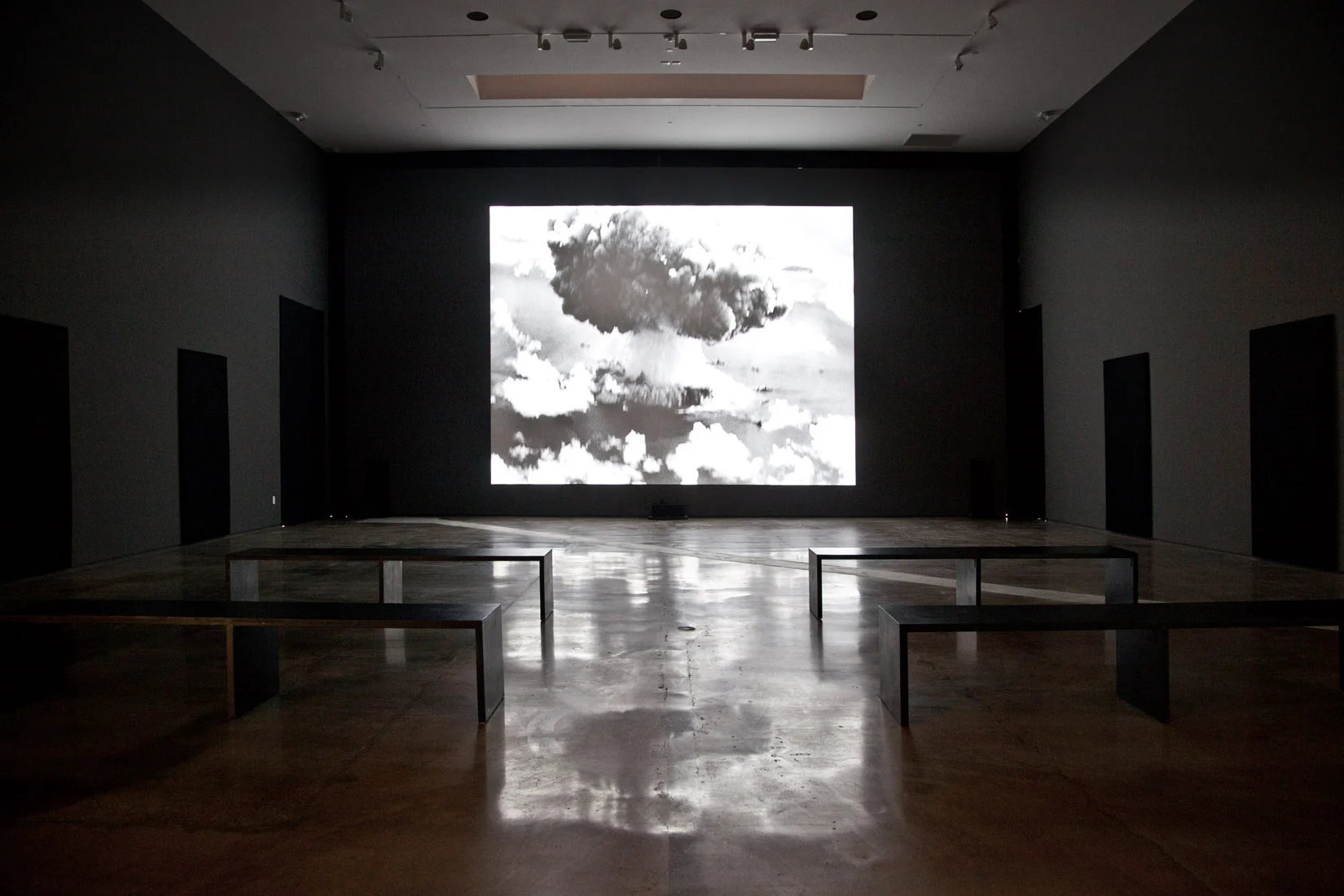
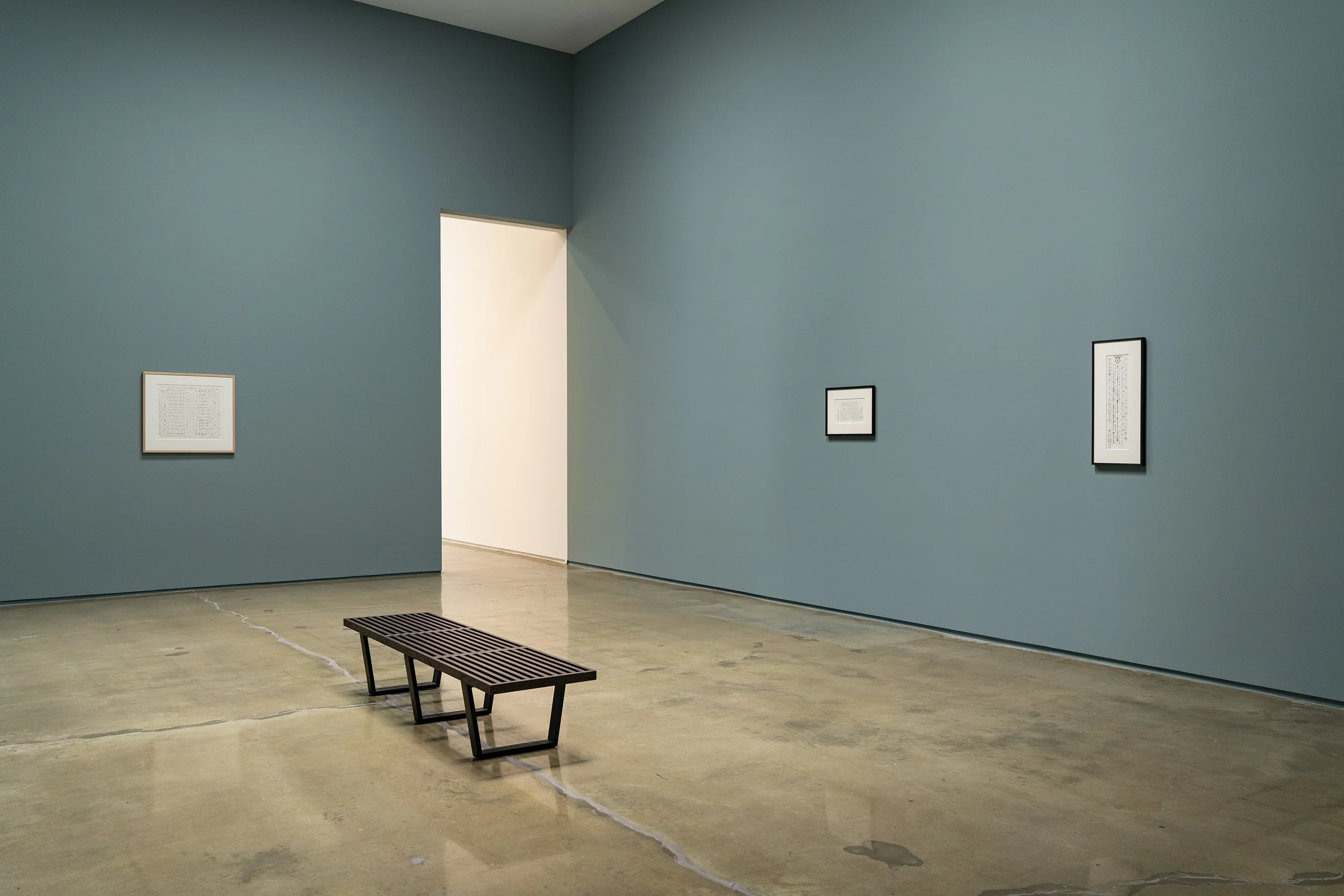
Kohn Gallery is pleased to present Bruce Conner: CROSSROADS, on view November 8 through December 20, featuring the iconic 1976 short film of declassified footage of the first underwater atomic bomb test, The fully restored 36-minute film, with original music by Patrick Gleeson and Terry Riley, was last seen in a single screening last fall at the Museum of Modern Art, New York; the exhibition at Kohn gallery returns the film to the west coast. In addition to the film, a selection of Conner’s drawings focused similar themes of destruction and resurrection, created between 1962 and 2004.

On July 25, 1946, “Operation Crossroads” detonated “Baker,” the first underwater atomic bomb test, 909 feet under Bikini Atoll in the Pacific Ocean. The bomb forever altered the course of human events and yielded a horrific vision of the apocalypse as documented by more than 700 cameras on ships, on land, and in the air. Nearly half the world’s supply of film was at Bikini Atoll for these tests, making these explosions the most thoroughly photographed moment in history.

Conner selected 27 individual shots from declassified U.S. Government footage of this event from the National Archives to transform the images of nuclear holocaust into hypnotic abstraction. “ Whether in film, sculpture, photography or drawing, Bruce Conner has been a role model for younger artists for at least two generations,” says Michael Kohn, Conner’s dealer for the last 25 years and expert on his work. “The mesmerizing quality of the repetitive film edits in films like CROSSROADS is a direct influence on artists from Dennis Hopper to Christian Marclay.  And Conner’s polymathic approach to art making is discovered by each generation of new young artists.” 

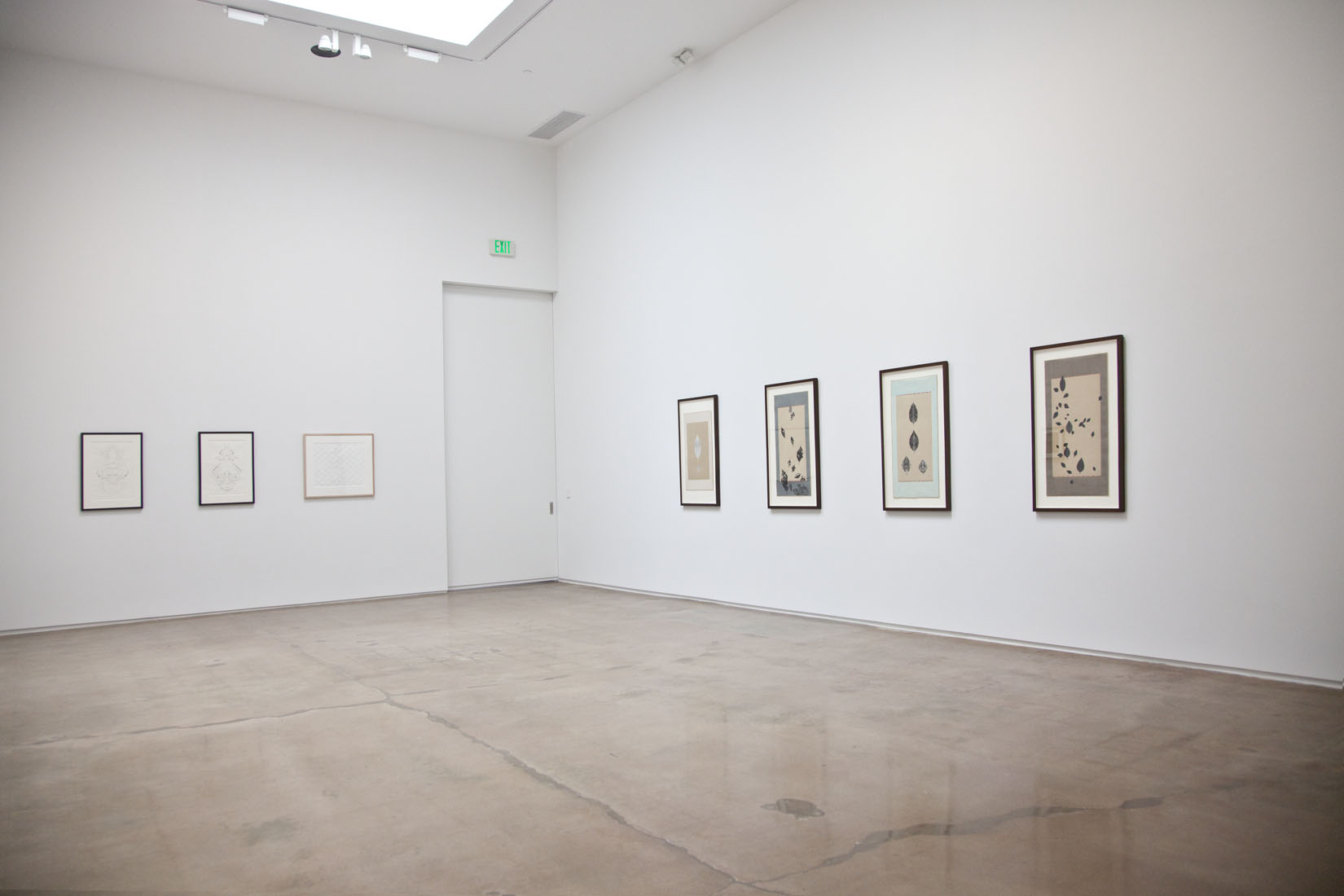
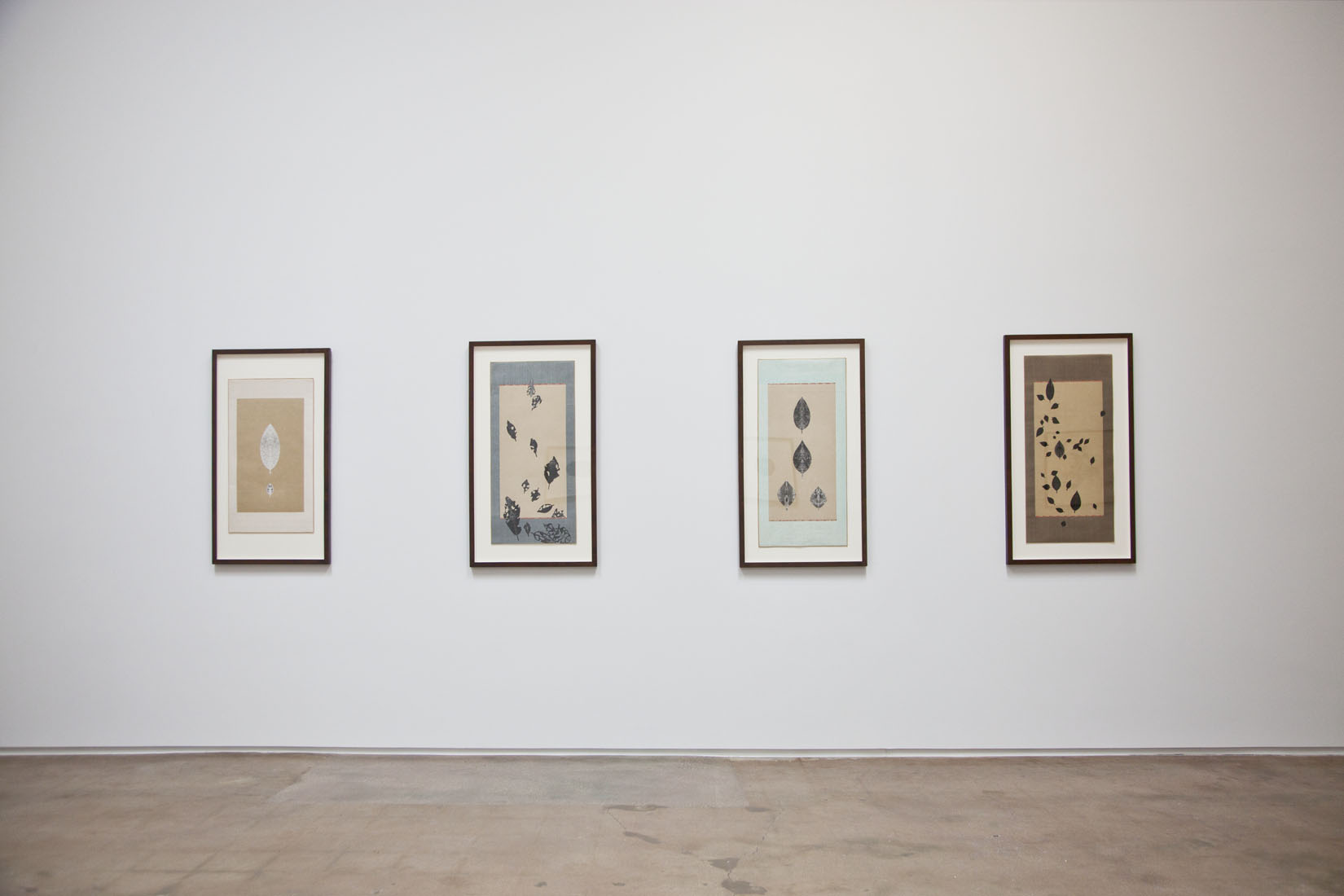
Accompanying CROSSROADS is a group of works on paper that date from 1955 to 2004 by Conner.  These drawings not only relate symbolically to the film, as in MUSHROOM, 1962, but also in the range of emotional depth of the varying works.  The mushroom image recurs in a number of drawings from the early 60s, most likely because of the artist’s admiration for the secret, complex growth of this fungal form.  The notion of great knowledge and wisdom contained within, be it a fungus or a nylon-veiled assemblage, is a consistent theme in Conner’s works.  In an untitled work from 1963 a labyrinthine and dense series of black lines simultaneously resembles a thumbprint and a black hole of space; in an inkblot drawing from 1995 the small mirrored shapes recall the self-reflective quality of fleeting images of inner thought.  Other drawings in the exhibition from the FALLING LEAVES series, created soon after 9/11 in 2001, show the fragility of nature in the face of human borne disaster. The pathos of these works on paper is poignantly close to that elicited by CROSSROADS.

Artist Page